Scroll through TractorHouse on any given morning and you will see the same thing a buyer sees: a 1998 Deere 7410 shot from the weeds next to a broken gooseneck, hour meter not pictured, tires not pictured, one side of the tractor not pictured at all, and a description that reads "runs good, 3,000 hrs, call for price." That listing will sit for months while a near-identical machine two pages over, shot cleanly from eight angles with honest copy, moves in ten days. The second dealer is not getting lucky. They are getting calls because their listing answers questions the first listing refuses to answer.
Photography and listing copy are the cheapest things a used equipment dealer can improve, and they return more money per hour of effort than almost anything else in the operation. This is a playbook for doing it properly.
Clean the Machine First
Nothing else matters until the machine is clean. Not detailer clean, but farmer clean: pressure washed, mud off the tires, leaves and chaff out of the hood louvers, glass wiped, seat clean, floor mat shaken out. Ten minutes with a blower and a rag separates your listing from 70 percent of the competition by itself.
Touch up cab glass, wipe battery posts, and remove obvious trash. Do not repaint, do not apply tire shine, do not cover anything. Buyers can smell a cosmetic cover-up in the photos and they discount hard for it. Clean honesty beats shined-up deception every time.
Background and Lighting
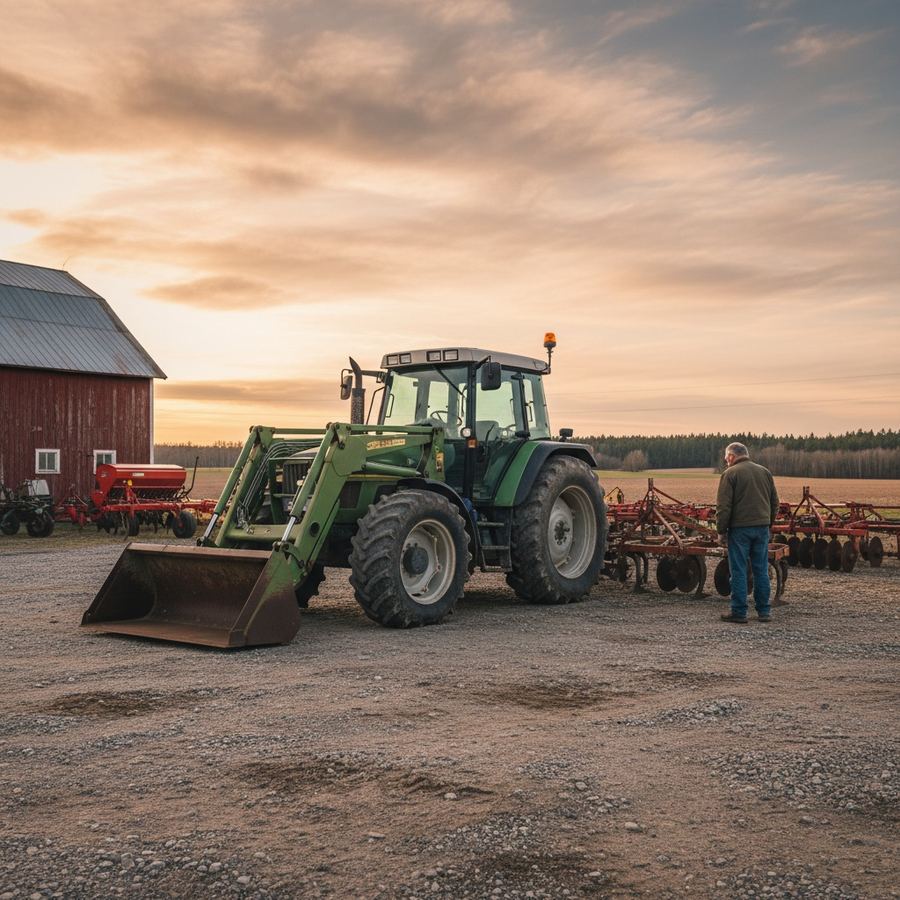
Background matters more than most dealers realize. Park the machine on clean gravel or short grass with nothing behind it except sky, a clean building wall, or a row of trees. Weeds, junk trucks, scrap piles, and the back of the shop are all buyer-repelling. A cluttered background reads as "this dealer does not care about presentation," which the buyer unconsciously extends to "this dealer does not care about inspection either."
Lighting is easy once you know what to look for. Shoot early morning or late afternoon on a clear day, when the sun is low and soft. Overcast days are even better because they eliminate harsh shadows entirely. Midday sun on a cloudless day creates hot spots on paint and deep shadows under the cab that hide detail. Never shoot into the sun. Put the sun at your back or to your side.
Required Angles, Every Listing
These are the photos every serious buyer expects to see. If any are missing, experienced buyers assume the dealer is hiding something and either skip the listing or discount their bid.
- Front three-quarter view showing grille, front tires, and front loader or weights if equipped
- Rear three-quarter view showing drawbar, three-point hitch, PTO shaft, and rear tires
- Left side square view, full machine in frame
- Right side square view, full machine in frame
- Front square view showing loader, weights, and front axle
- Rear square view showing hitch, PTO, and hydraulic remotes
- Cab interior from the operator's door, showing seat, floor, and dash
- Dash close-up with hour meter clearly readable, no fingers, no glare
- Engine bay with hood open if possible
- Tire tread close-up on both front and rear (four photos)
- Hydraulic remote bank close-up showing number of outlets and condition
- Any known issue or wear point, photographed directly
That is roughly 15 to 20 photos. Most listings have 8 or fewer. Going from 8 to 18 photos can double the inquiry rate on the same piece of iron, and the photos cost you 15 extra minutes.
The Hour Meter Photo Specifically
This is worth its own section because it is where amateur listings fail most visibly. The hour meter needs to be clearly photographed, in focus, with the number readable, from a straight angle. No fingers partially covering digits. No glare on the glass. No blurry phone zoom from across the cab.
A clearly documented hour meter builds trust instantly. A missing or obscured hour meter signals evasion, even if the dealer had no intent to mislead. Readers of what hours matter on a used tractor know to look for this photo first and walk away when it is not there.
Walk-Around Video
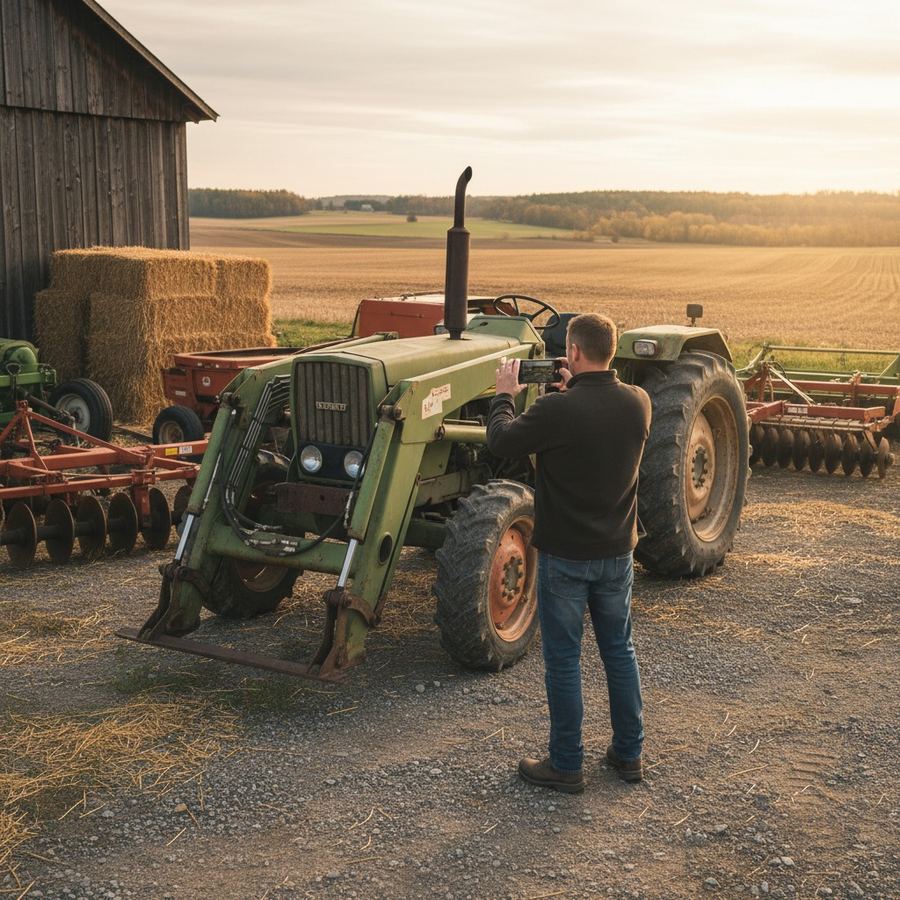
A two to four minute walk-around video is the single highest-impact addition to any listing. Start the engine cold if possible, walk around the machine with the phone held steady, narrate what you are showing, cycle the loader, operate the remotes, engage the PTO, show the cab interior. Upload it to YouTube and embed or link from the listing.
Serious buyers watch these videos before they ever call. Buyers three states away will decide whether to make the trip based on this video alone. A dealer who consistently posts walk-around videos earns a reputation for transparency, and that reputation brings repeat buyers who skip competing listings without one.
Writing the Listing Copy
Listing copy should read like a conversation with a knowledgeable buyer who wants the facts and can spot nonsense. That means specifics, not superlatives.
Bad: "Runs great, nice tractor, must see."
Good: "1998 Deere 7410, 6,430 indicated hours, original hour meter per prior owner. Cab with factory air working, interior clean, headliner intact. Loader is aftermarket Koyker K5, quick-attach, 72-inch bucket, hoses recently replaced. Three rear remotes, all operational. Rear tires 18.4R38, approximately 60 percent, front 14.9R28 approximately 70 percent. Known issues: small hydraulic weep at left rear remote, not currently affecting operation. Light oil seep at timing cover, dry underneath. No known driveline issues. Came to us as a trade from a one-owner row crop operation in northern Iowa, service records available for the last eight years."
The good version is 120 words and it answers most of the questions a serious buyer would call to ask. It also discloses two minor issues, which builds trust faster than any marketing language ever could. Buyers who see honest disclosure assume that if the dealer was willing to mention the small stuff, there probably is not larger stuff being hidden.
Pricing Transparency
Listings marked "call for price" get dramatically fewer inquiries than listings with a number. Many buyers will not call at all on a no-price listing because they assume it is priced high and the dealer knows it. They move on to the next one.
Put a number on the listing. If you need room to negotiate, price it 5 to 8 percent above your walk number and leave yourself the room. "Call for price" is a move from 1998 and it is not coming back.
What Was Repaired and When
If your shop did work on the machine, list it. Date, hours, and description. "Replaced front hub seals and bearings, October 2024, 6,380 hours. Rebuilt PTO clutch pack, September 2024, 6,370 hours. New batteries, November 2024." This kind of recent work documentation raises perceived value more than the cost of the work in almost every case. Buyers assume a machine with documented recent repairs has been cared for. A machine with no documentation is assumed to have been neglected, even if it was not.
Inventory Data Discipline
The other half of good listings is data accuracy. Year, model, serial number, hours, attachments, options, and location need to be correct on every channel where you list the unit. TractorHouse and the dealer's own website showing two different hour readings on the same machine is a trust-killer. It is also extremely common, because most small dealers update listings manually on each platform and forget to keep them in sync.
Treat listing data like accounting data. One source of truth, kept current, pushed out to every channel cleanly. This is more of a workflow problem than a content problem and it is covered further in building trust in online equipment listings. The inventory category pages at used tractors and farm equipment give a sense of the listing norms buyers are comparing you against.
The Trust Gap That Costs You Calls
Every buyer looking at used equipment online is running a mental trust score on every listing they see. The score starts low and the dealer earns points or loses them with every photo, every line of copy, and every missing detail. A clean set of photos, an honest description, a visible hour meter, a walk-around video, disclosed known issues, and a real price: that listing is at 90 percent trust before the phone rings.
The trust gap translates directly to inquiries, which translate to sales, which translate to margin. Two dealers with the same inventory can see wildly different sell-through rates based on nothing but presentation and honesty. The better one is not working harder on sales calls. They are working harder on the listing itself so the calls they get are from buyers who are already halfway sold. That is the leverage point, and it costs almost nothing to execute once you commit to doing it consistently.