Buying used farm equipment is a skill, and like most skills it gets cheaper with practice. The difference between a first-time buyer and someone on their fifth tractor is not that the experienced buyer gets lucky more often. It is that they know which questions to ask, which noises to listen for, and which cosmetic issues to ignore in favor of the real ones hiding underneath. The articles in this section exist to shortcut that learning curve.
Why written buyer guides matter
Most used tractor advice lives in three places: forum threads from a decade ago, dealer marketing copy that exists to move inventory, and YouTube videos that are half useful and half sponsored content. None of those are bad sources, but none of them are systematic. A buyer showing up to look at a 1978 John Deere 4230 needs a checklist in their head, not a vague memory of a video they watched last month. Written guides give you something you can reference at the tractor and again after you get home, and they let you compare notes between machines honestly.
The guides below are the six we get asked about most. They cover the full arc of a used purchase: the mechanical inspection, the judgment calls (hours, drive configuration, size), and the sniff test on the listing and seller before you ever drive out to look.
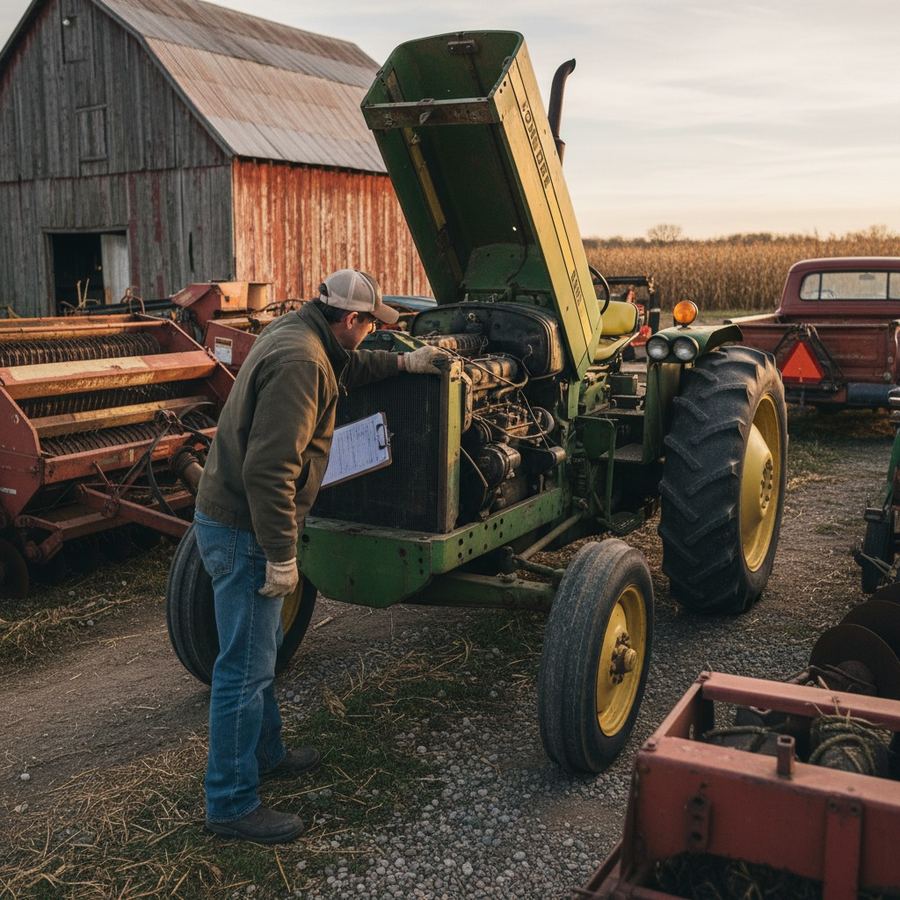
The guides
How to Inspect a Used Tractor
A full walk-around checklist: engine, hydraulics, PTO, transmission, steering, and sheet metal.
What Hours Actually Matter
Hour meter context by brand and era. Why 8,000 hours is fine on one tractor and a warning on another.
2WD vs 4WD for Small Farms
When front-wheel assist pays for itself and when it is extra weight and extra parts to maintain.
Tractor Sizes for Acreage Owners
Matching horsepower, weight, and PTO to pasture, hay ground, and chore tractor work.
What to Check on Older Diesel Tractors
Cold starts, blow-by, fuel system tells, and the shortcuts tired injector pumps take.
Common Listing Red Flags
The phrases, photo crops, and omissions that usually mean the seller is hiding something.
Where to start
If this is your first used tractor, read the inspection guide first, even before you start browsing listings. Knowing what an inspection actually looks like changes the way you read ads. You will start to notice which listings include hydraulic and PTO details and which ones skip them, which matters before you waste a half-day driving to look at a tractor with a soft lift.
From there, the listing red flags article will sharpen your filter. The combination of those two gets most first-time buyers to a much better position before they ever get in the truck. Sizing the tractor correctly is the other big first-time buyer trap, so the sizing guide is a close third.
Experienced buyers already have the inspection instinct built in, but the guide on what hours matter and the piece on older diesel specifics still come up in conversations about individual machines. These are the two articles that get shared the most between buyers comparing notes on a specific tractor. The 2WD versus 4WD question is less about experience and more about terrain and use case, and the 2WD vs 4WD guide is worth a read any time you are considering switching drive configurations.
If you are helping someone else shop, sending them these six links in the right order is usually more useful than trying to coach them over the phone. The guides are written to be read cold by someone who has never turned a wrench, and they get technical where they need to without assuming prior knowledge.