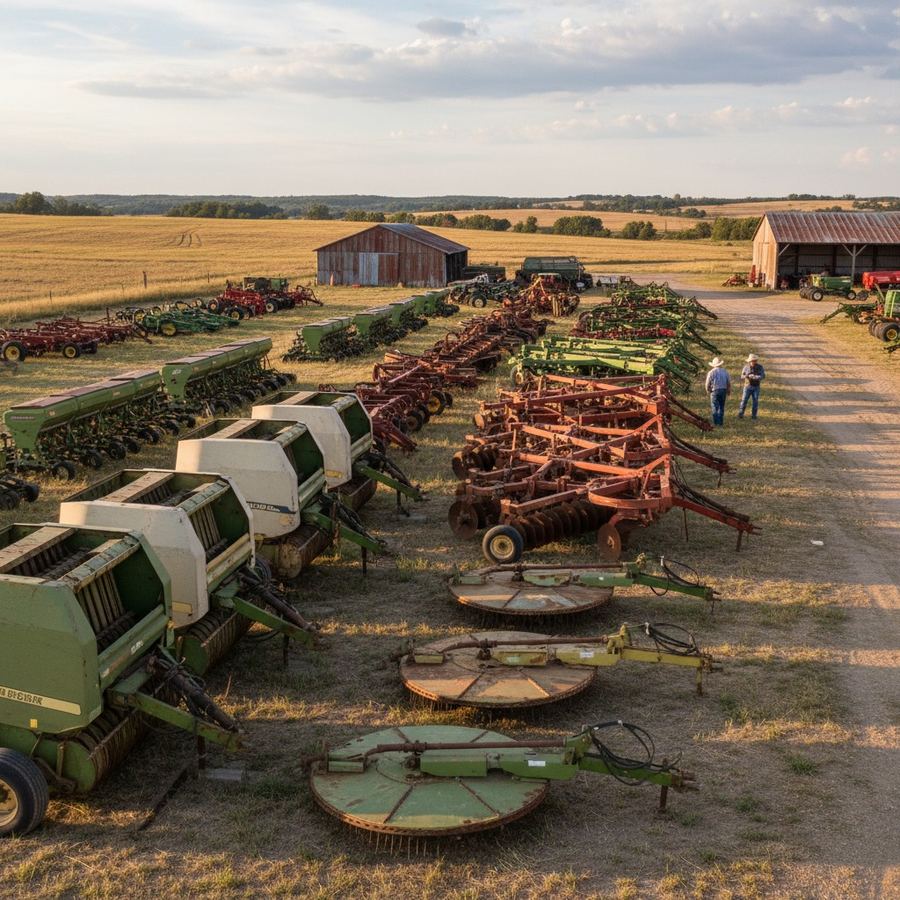
Tractors get most of the attention, but implements are usually where the real value sits on a working farm. A clean 1982 John Deere 726 mulch finisher or a decent Vermeer 504 round baler can outlast two or three tractors if it is maintained. Implements are often simpler machines: hydraulics, bearings, wear parts, and steel. That simplicity is why a well-kept 40 year old grain drill can still be doing its job while a 15 year old one with a failed electronic monitor sits in a fence row.
Why implements are a different market
Dealers usually price hay tools, tillage, and planters separately from tractors because the buyer pools barely overlap. Someone shopping for a 70 horsepower utility might have no interest in a 12 foot disc, and the hay operation buying a new-to-them Hesston 4590 square baler already has a tractor lined up for it. That split is why you will see implements sit on consignment lots for a full season before selling: the right buyer has not walked the lot yet.
The other big distinction is the "shed-kept" versus "field-found" split. A shed-kept John Deere 714 chuck wagon might have twenty years on it and still look 90 percent new. A field-found one, meaning it spent its life parked in a pasture corner under a tree, can be the same model year with half the remaining life. Paint fades. Hydraulic cylinders pit. Wiring dries out. Wood floors rot. Ask where it has been stored, and then look at it and decide whether the answer was honest.
Browse equipment categories
Used Hay Equipment
Mowers, rakes, tedders, round and square balers. Belt condition, pickup wear, and bearing checks.
Used Tillage Equipment
Plows, discs, chisels, field cultivators, and soil finishers. Frame condition and wear parts.
Used Seed Drills & Planters
Grain drills, row planters, and older no-till setups. Metering, openers, and row unit wear.
Used Loaders & Attachments
Front-end loaders, buckets, grapples, bale spears, and quick-attach mounts.
Used Utility Tractors
The tractors most often paired with implements. Power, PTO, and hydraulic considerations.
Used Row Crop Tractors
For operations running wider tillage, larger planters, and heavier draft implements.
Common issues to watch for
Most implement failures trace back to two systems: hydraulics and any kind of drivetrain, which on implements usually means PTO shafts, gearboxes, and chain drives. The rest of the failures are wear parts and consumables, which are honest costs, not surprises.
Hydraulic problems on implements often show up as soft cylinders, slow lift, or lines that weep at the fittings. A tired hydraulic cylinder with a scored rod is a repairable part, but a bent cylinder or a cracked trunnion is a different story. Our guide on hydraulic problems buyers should watch for walks through the common tells, including the leak-down test you can do with the implement parked on a hard surface.
PTO driven implements such as balers, mowers, and rotary cutters live or die by their gearboxes and slip clutches. A baler gearbox that has been run low on oil for a season is a thousand dollar repair hiding behind quiet operation on a test run. Our article on PTO, clutch, and transmission warning signs covers what to listen for and what to feel for when the implement is engaged.
Tire and wheel condition matters more on implements than buyers expect, especially on hay equipment, grain carts, and wagons. Sidewall cracks on an implement tire that has not moved in three years are common, and so is bearing noise hidden until the implement is actually rolling down the road. The piece on tire condition and wheel issues covers what a bad sidewall means and when a reseal on a hub is worth doing.