5,000 hours on a JD 4020 means something completely different than 5,000 hours on a 2018 utility tractor, and if you are shopping based on the hour meter alone you will overpay for tired machines and walk past good ones. The number on the tach is a starting point, nothing more. What matters is how those hours were accumulated, on what model, in what decade, and under what kind of load.
Why the Same Number Means Different Things
A JD 4020 is a 6.6 liter naturally aspirated inline six from the mid-1960s through 1972. It was built to log 10,000 to 15,000 hours before a major overhaul was on the table, and plenty of them have gone 20,000. The engine loafs at rated speed, the cooling system is generous, and the block is thick-walled iron from a time when fuel was cheap and thermal efficiency was not the priority. 5,000 hours on a 4020 is a middle-aged tractor. It probably has original injectors, original pistons, and another 20 years of work in it if someone changed the oil on schedule.
Now take a 2018 compact utility tractor with a 24 horsepower 3-cylinder Tier 4 diesel, DPF regen cycles, and a common-rail injection system turning out 150 bar of fuel pressure. 5,000 hours on that machine is a lot. Emissions components have a real service life. DPF filters clog. EGR valves coke up. Common rail injectors are $400 to $900 each and there are three of them. That compact at 5,000 hours is closer to the end of its cheap-to-maintain life than a 4020 at the same reading.
Duty Cycle Is the Real Question
Hours under load are not equal to hours at idle. A tractor used 80% of its life on a PTO-driven rotary cutter in heavy grass has been working hard. A tractor used for a loader on a hobby farm, idling between bucket loads, has logged hours but not wear. A tractor used on a round baler in hot alfalfa fields has been running near max PTO horsepower for most of its accumulated time.
The classic example is the dealership demo tractor. It shows up with 400 hours on the clock and a new-tractor price, but half of those hours were spent idling in a showroom with the AC running or crawling through a tradeshow. Those hours did not hurt anything except the fuel budget. Compare it to a 400-hour tractor that spent its life with a brush hog on a fence-line crew. Same number, completely different condition.
The reverse is worse. A 1990s Kubota L3650 that sat in a barn for 15 years with 900 hours on the meter is not a steal. It is a gamble. Injection pump seals dry out, the fuel system gums up, the head gasket weeps once coolant finally warms back up, and the tires are flat-spotted on the rims. Moisture has been sitting on cylinder walls for a decade and a half. A low-hour barn find can need a teardown that a 4,000-hour working tractor will never need.
How Hours Get Recorded
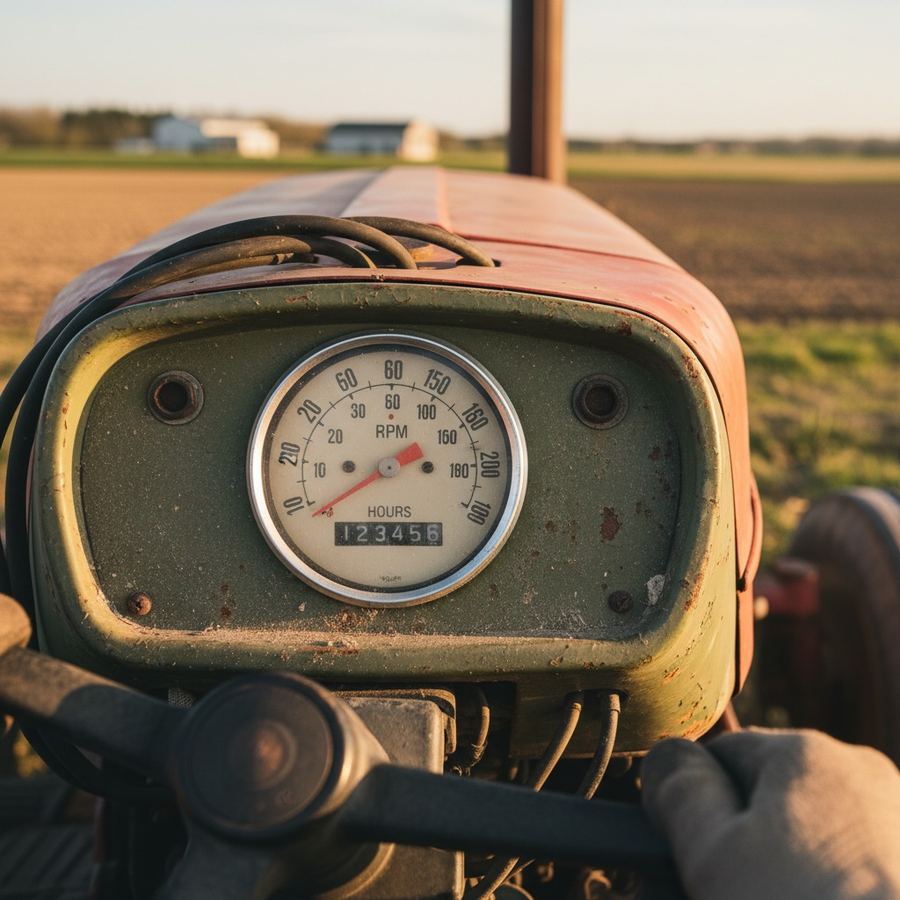
Pre-1980s tractors use mechanical hour meters driven off the tachometer cable. These accumulate at a rate tied to engine RPM, usually calibrated to count an "hour" at rated PTO speed of 2,100 or 2,200 RPM. Run the tractor at half throttle all day and the meter will record less than the clock actually says. Run it flat out and it records more. On a JD 4020, a 3,500 hour reading could represent 4,500 real hours of loader idling or 3,000 hours of hard field work. You cannot tell from the meter.
From roughly the mid-1980s into the 1990s most utility tractors moved to electronic tach-driven meters that count at a fixed rate when the engine is running, regardless of RPM. A 1988 Case IH 7140 tracks wall-clock hours. That is more honest, but it does not tell you whether those hours were PTO load or idle.
Modern tractors with CAN bus systems record a whole telemetry history: engine load percentage, fault codes, DPF regen events, peak coolant temperatures, over-speed events. On a 2015 or newer JD, Case IH, or New Holland, a dealer with the diagnostic tool can pull the engine load histogram and you can actually see whether those 3,000 hours were mostly under 30% load or mostly over 80%. Worth asking for on any machine that supports it.
The 99,999 Rollover and the Replaced Meter
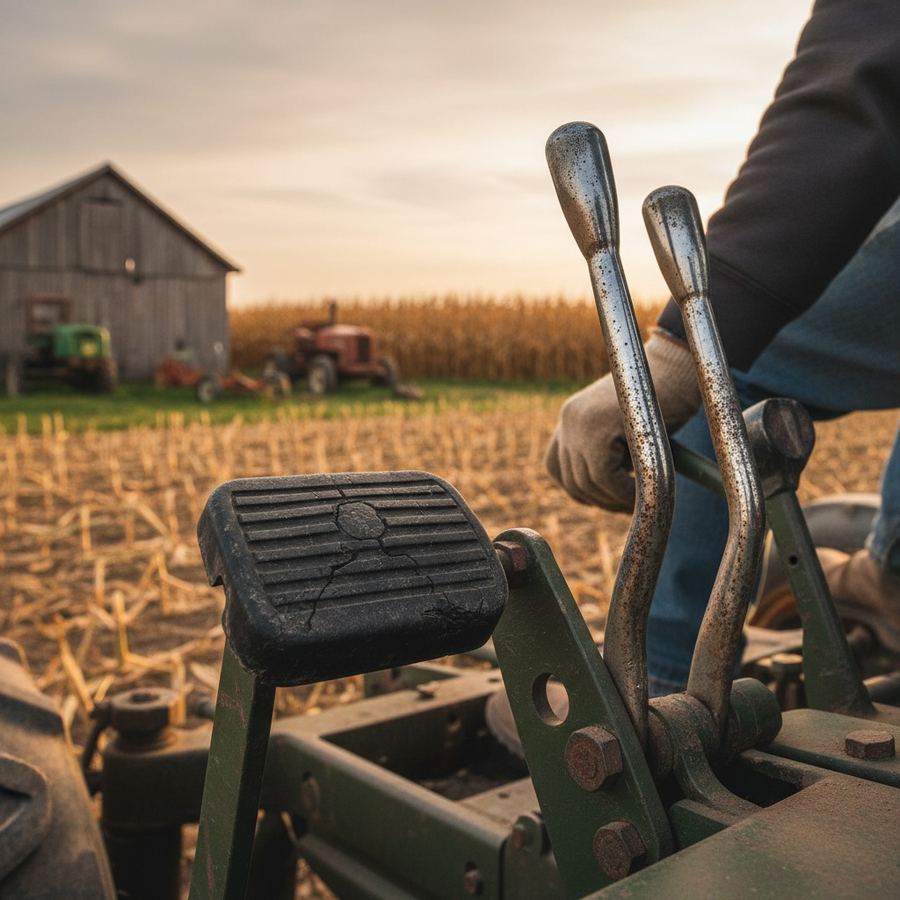
Old mechanical tachs roll over at 9,999 or 99,999. A JD 4440 that reads 1,200 hours and has a patina that says otherwise is either a barn queen or it has rolled the meter once. The giveaways: the condition of the clutch pedal rubber, the wear on the step plates, the polish on the hydraulic control levers where hands touched them a million times, the shine on the seat frame where pants rubbed. A real 1,200 hour tractor has sharp lug edges on the tires and no lever polish. A rolled-over tractor has worn pedals and a shiny seat frame no matter what the meter says.
Replaced hour meters are legal and sometimes necessary. Meters fail. A reputable seller will tell you the meter was replaced at X hours and note it in the service records. A shady seller will install a low-hour meter from a scrap tractor and hope you do not notice. Always cross-check the meter reading against the physical wear and the service records. If the records mention an injection pump rebuild at 6,800 hours but the meter says 4,100, something is wrong.
Hour Ranges Worth Knowing
Rough guidelines for field-use utility and row crop tractors built from the 1960s through the 1990s: under 3,000 hours is low, 3,000 to 6,000 is average working life, 6,000 to 10,000 is high but still useful, over 10,000 means major components are on borrowed time. For pre-1970s workhorses like a JD 4020 or an IH 1066, add 3,000 to each bracket. For a 2010-and-newer compact with a regen system, subtract 2,000.
None of this replaces a proper inspection. The hour meter tells you where to start negotiating. Our checklist for how to inspect a used tractor before buying walks through what to actually look at once you are standing in front of the machine. If you are sizing up an older diesel specifically, our notes on what to check on older diesel tractors go into the cold start and fuel system checks that matter most on pre-1990 machines.
The Bottom Line on Hours
Treat the hour meter as one data point among many. Cross-reference it with physical wear, service records when available, and your own inspection. A 7,000-hour JD 4020 with fresh paint on the injection pump cover and greasy fittings that shine has been maintained and will outlive you. A 1,500-hour barn queen with flat tires and a mouse nest in the air cleaner needs a $4,000 recommissioning before it is safe to use. Hours matter, but they matter less than the story of how they were put on. For more on picking the right size machine for your land, see best used tractor sizes for acreage owners.