Where you buy a used tractor matters almost as much as which tractor you buy. The same 1988 Case IH 1896 can be priced thousands of dollars apart between a live on-farm auction, an online timed auction, a used dealer lot, a consignment yard, and a private sale off a fence-line sign. Each channel has its own rules, its own advantages, and its own ways to lose money. This hub covers the landscape and links out to the detailed articles on each channel.
The main buying channels
Live auctions, meaning in-person on-site sales, remain the traditional way to buy used farm equipment, and they still set much of the pricing the rest of the market follows. Retirement sales, estate sales, and bank-ordered dispersal auctions run by regional auctioneers put huge amounts of working equipment on the block every year. A well-run farm retirement sale with quality iron will pull buyers from three states. Prices can be strong, but the machines are usually in the condition their previous owner left them in, which on a retirement sale often means excellent. On an estate sale after a machine has sat, the story is different.
Online auctions have reshaped the market in the last decade. Sites running timed sales, and the online components of major auctioneers like Mecum, Sullivan, AuctionTime, and BigIron, connect buyers to sellers who never would have found each other. TractorHouse and similar listing services function as the reference inventory for much of the dealer world. The trade-off is inspection: on an online sale, you are either driving to preview or trusting the photos, the description, and whatever condition report the seller provided.
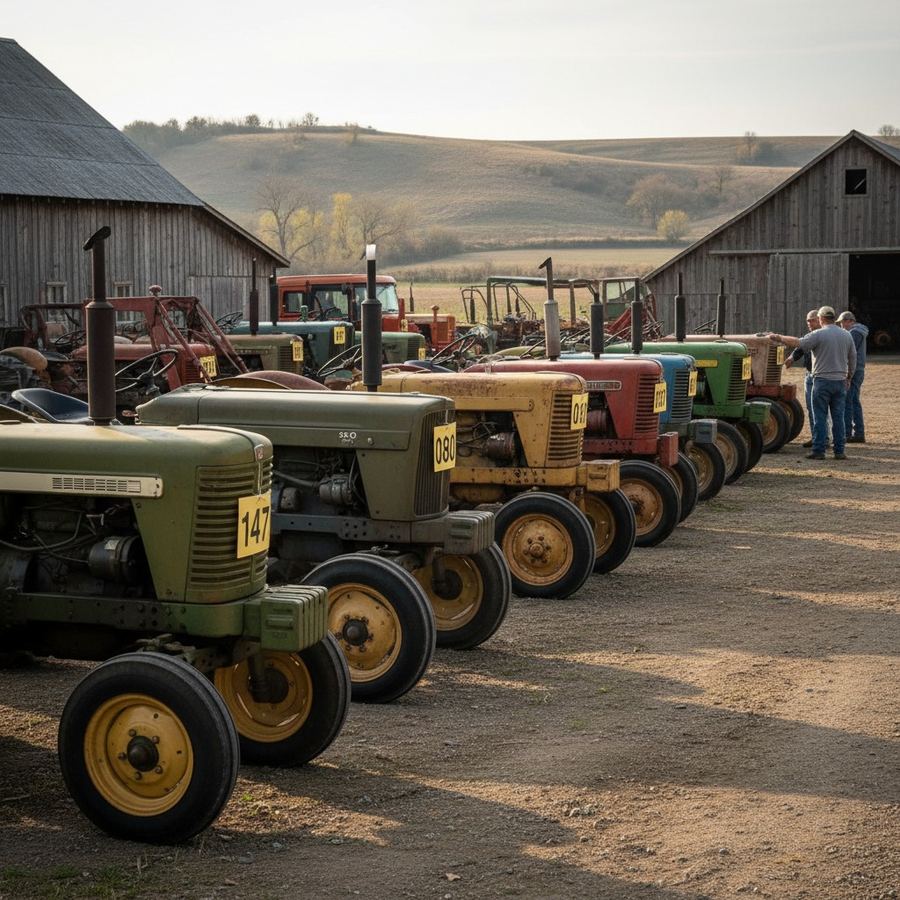
Independent used dealers buy at auction, at trade-in, and from farms, clean the machines up, and resell at retail. Their markups are real but not always unreasonable, especially if the dealer does any reconditioning (hydraulic reseal, injector work, fluid service, paint touch-up). A good used dealer is worth the premium on certain kinds of buyers: first-time buyers who need a working machine without surprises, and busy buyers who do not have time to chase private listings.
Consignment lots sit between dealers and private sales. The machine is on the dealer's lot and gets the dealer's visibility, but title and condition responsibility usually still belong to the original owner. Consignment is often where you find the better-preserved iron from older owners who do not want to run their own sale. The price negotiation dynamics are different than with a dealer's own inventory, and the article on consignment goes into those details.
Private treaty sales, meaning direct from the previous owner, can be the cheapest route if you know what you are doing. They can also be the most expensive lesson a new buyer ever takes, because there is no dealer reputation on the line and no auctioneer standing between you and a problem.
Articles in this section
Auctions vs Dealer Purchases
Bidding dynamics, buyers' premiums, inspection windows, and post-sale recourse.
Questions to Ask a Dealer
The questions that get real answers versus the ones that signal you do not know what you are asking.
Consignment vs Private Sale
Who holds the title, who handles disputes, and how prices tend to compare across channels.
How Dealers List Equipment
What good dealer listings include, and what the absence of certain details tells you.
Trust in Online Listings
How to read a private or consignment listing from a seller you will never meet in person.
Which channel suits which buyer
First-time buyers are usually better off at independent used dealers with decent reputations, even knowing the price is higher, because the failure modes at auction and on private sales require more experience to spot than a new buyer has. Experienced buyers who do their own wrenching often prefer live auctions and private treaty, because that is where the price advantage lives for someone who can inspect competently. Online auctions sit in the middle: great for experienced buyers who can travel to preview, risky for buyers relying on photos. The auction versus dealer article covers the specific trade-offs, and the dealer questions guide is worth reading before your first dealer visit regardless of experience level.