A buyer drove 640 miles from western Kansas to a dealer lot in southern Missouri to look at a listed 8430 with 5,800 hours. The listing photos showed the dash reading 5,812. When he climbed into the cab, the meter read 7,140. The dealer explained that the listing was from when the tractor first came in eight months ago and they had not updated it. The buyer left without looking at anything else on the lot, and he will never call that dealer again. More importantly, when he gets home, he will tell six other farmers in his co-op the story, and those six will tell others. One stale listing cost that dealer maybe 30 future calls over five years.
Trust in online equipment sales compounds in both directions. Every honest listing builds a reputation that brings buyers back and sends referrals. Every sloppy or misleading listing burns a little of that reputation, and the loss is invisible on any single transaction but brutal over time. This is a playbook for building the trust side of that equation.
Transparency as a Sales Strategy
The most counterintuitive finding in used equipment sales is that disclosing known issues increases sell-through rates. Dealers who list minor defects openly (a small hydraulic weep, a crack in the cab glass, a tire at 40 percent, a tired starter) move equipment faster than dealers who stay silent about the same issues. The reason is that buyers trust the whole listing more when the seller has demonstrated willingness to point out problems.
The psychology is simple. If the listing mentions two minor issues, the buyer thinks: they told me about the small stuff, so probably there is not big stuff hiding. If the listing mentions nothing, the buyer thinks: either this machine is perfect (unlikely on anything over 5 years old) or the dealer is not telling me everything. The second conclusion wins in most buyers' heads, and it should, because it is usually right.
Transparent disclosure is not a warranty. It is a signal. And in online sales, signals are everything you have, because the buyer is not standing next to the machine.
Documentation That Matters
Certain documents, if you have them, should be photographed and included in every listing where they exist:
- Service records from prior ownership, especially if from an OEM dealer
- Your shop's intake inspection report, with checked items visible
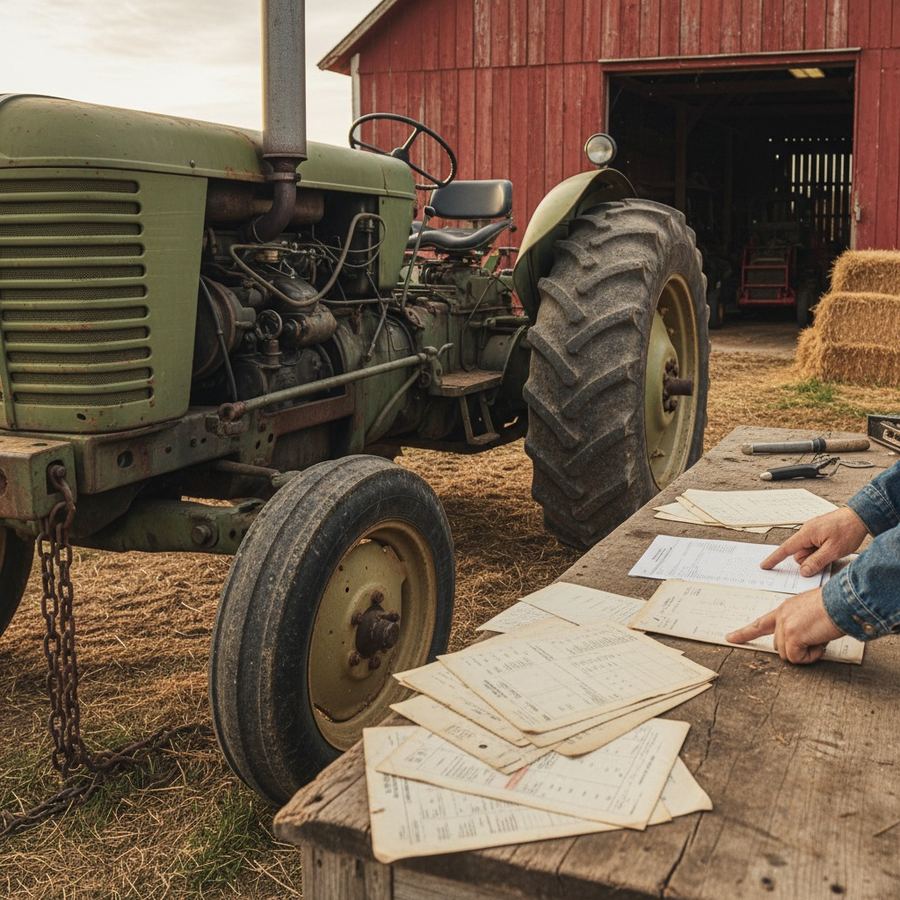
- Work orders for any repairs you performed before listing, with dates and hours
- Original owner's manual and any operator documentation
- Previous registration or title documentation if non-sensitive
A photo of an actual work order next to the tractor does more for a listing's credibility than a paragraph of marketing copy ever will. Blur personal information if needed, but show the document. "Full records available on request" is dramatically less convincing than a readable photo of the records themselves.
The Drove-Four-States Calculation
At scale, wasted buyer trips are a hidden cost center most dealers never measure. Every buyer who drives 400 miles to see a machine that does not match its listing represents not just a lost sale but a permanent reputation injury in that buyer's network. Rural communities run on word of mouth. One angry retired farmer in a coffee shop can cost a dealer 20 calls over the next year.
The math is brutal if you do it honestly. Assume 1 in 20 buyers who drive a long distance to see a machine finds it materially different from the listing. Assume each of those 1-in-20 tells 5 other people the story, and each of those tells 2 more. One mismatch creates 15 negative data points in the local market. Multiply by however many mismatches per month your listings are producing. That is the invisible cost of sloppy inventory data.
The fix is not marketing. It is data discipline.
Standard Listing Data Fields
Every listing should have the same required fields filled in accurately. A standard template that your team uses on every unit prevents the common gaps that kill trust:
- Year (verified from serial number, not assumed from model name)
- Make and model, full designation
- Serial number, last 6 digits at minimum
- Current engine hours, verified on the meter not from memory
- Transmission type and speed
- Cab or open station
- Front wheel assist, 2WD or MFWD
- Number of rear remotes
- PTO speeds available
- Tire sizes and approximate condition
- Loader make, model, and attachments if equipped
- Known issues, disclosed
- Prior owner type (one-owner farm trade, auction purchase, dealer trade chain)
- Location of the machine
- Asking price
Missing fields are trust-killers. A listing with "Year: ?" or "Hours: unknown" on a machine the dealer has owned for four months tells the buyer that the dealer does not know their own inventory. Fill every field, every time. If you genuinely do not know something, say so explicitly and explain why, rather than leaving it blank.
Cross-Channel Consistency
Most small dealers list the same machine on three to six channels: their own website, TractorHouse, AuctionTime, Facebook Marketplace, Iron Search, and maybe MachineryPete or a regional classified site. Each platform has its own listing form, its own photo requirements, and its own update workflow. Keeping them all in sync manually is nearly impossible, and the result is the scenario described at the top of this page. Stale listings, mismatched hour readings, different asking prices on different sites, and photos that no longer match the machine's current state.
This is not a content problem. It is a workflow problem. Many small dealers still manage their inventory in a spreadsheet, or on paper, or entirely in the head of whoever walks the lot most often. Data gets lost in the gaps between platforms. Updates to one listing fail to propagate to others. A machine sells on Wednesday and the Facebook listing sits live for three more weeks getting phone calls the dealer has to field and disappoint.
The fix is to treat inventory as a single source of truth, managed in one place, and pushed out to all channels from that one record. Purpose-built shop and inventory management software like Shop Commander handles this by tying each unit of inventory to its service records, intake photos, work orders, and listing data, and keeping that information current across wherever the unit is advertised. When the machine sells, it comes off every channel at once. When a new repair is logged, the listing description can reflect it. When hours change because the machine was moved around the lot, the photo of the dash and the listing copy move with it. The discipline that a platform enforces is worth more than any single feature it provides.
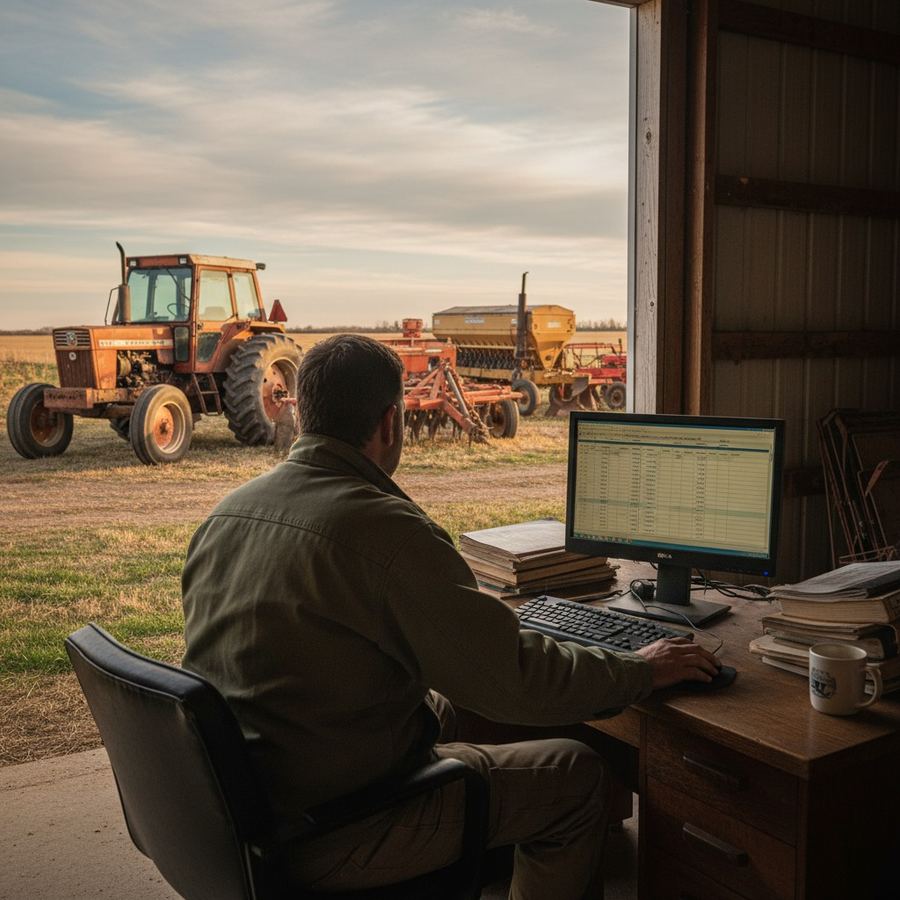
You can build the same discipline manually with a well-maintained spreadsheet and strict update procedures, and some small dealers do it successfully. The point is not the specific tool. The point is that every listing on every platform should trace back to the same current record, and that record should include the repair and service history for the machine. When the two get decoupled, trust erodes.
Post-Sale Follow-Up
Trust-building does not end at the sale. The 30 days after delivery are when buyers form their lasting impression of the dealer. A phone call a week after delivery asking whether everything is running well, whether the operator has questions, whether anything surfaced that was not in the listing, costs the dealer 10 minutes and pays dividends for years. It also catches small issues before they become angry phone calls, and gives the dealer a chance to address them proactively.
For machines with any form of warranty, this follow-up is doubly important. Buyers who feel supported during the warranty period become repeat customers and referrers. Buyers who feel ignored become the coffee shop story.
Reviews and Reputation
Ask every satisfied buyer for a short written review. Google Business reviews specifically matter for used equipment dealers because they are the first thing an out-of-state buyer sees when checking the dealer before driving. Five or six recent honest reviews with specifics ("bought a 7710 from them, exactly as listed, delivery was on time") do more than a polished website ever will. One review that mentions a specific machine by model, with accurate details, is worth ten generic "great dealer" reviews.
Do not incentivize reviews with discounts or gifts. Ask plainly, at the right moment (after delivery, after the first tank of fuel), from the buyers who are visibly happy. Most will say yes. Some will not, and that is fine.
The Compound Return
The best used equipment dealers are not the ones with the biggest lots or the lowest prices. They are the ones who have been honest for long enough that their name carries weight in multiple states and three generations of farmers. That reputation is built one honest listing at a time, over years, with no shortcuts. Buyers learn which dealers actually describe their equipment accurately, and those dealers get the calls first.
Everything in this article, transparency, documentation, data discipline, cross-channel consistency, post-sale follow-up, compounds in the same direction. None of it is expensive. Most of it is just the decision to do it and keep doing it when nothing seems to be changing in the short term. The short term is not where trust operates. The long term is, and by then the dealers who skipped these steps are watching their inquiry rates fall while wondering why.
For related material on the buyer side of this equation, see questions to ask a used equipment dealer, red flags in farm equipment listings, and how dealers photograph and list equipment. Understanding what buyers are looking for is the fastest way to figure out what your listings should be showing.