Most people shopping their first tractor buy too much machine. They walk onto a lot, see a 75 horsepower utility tractor that looks impressive, and write a check when a 30 horsepower compact would handle everything they actually plan to do. Oversizing costs you at purchase, at the fuel pump, in the shop when tires and filters cost twice as much, and in storage because the big tractor will not fit through a standard shed door. Here is how to match size to acreage without paying for horsepower you will never use.
Size Categories and What They Actually Do
Sub-compact tractors run under about 25 PTO horsepower and weigh 1,200 to 1,700 pounds. A JD 1025R is the reference machine in this class, along with the Kubota BX series and the Mahindra eMax. They handle a 4 or 5 foot rotary cutter, a small front loader with a 500 to 700 pound lift rating, a 48 inch tiller, and light snow work. They do not handle a round baler, a 6 foot brush hog in heavy brush, or pulling a loaded manure spreader through mud.
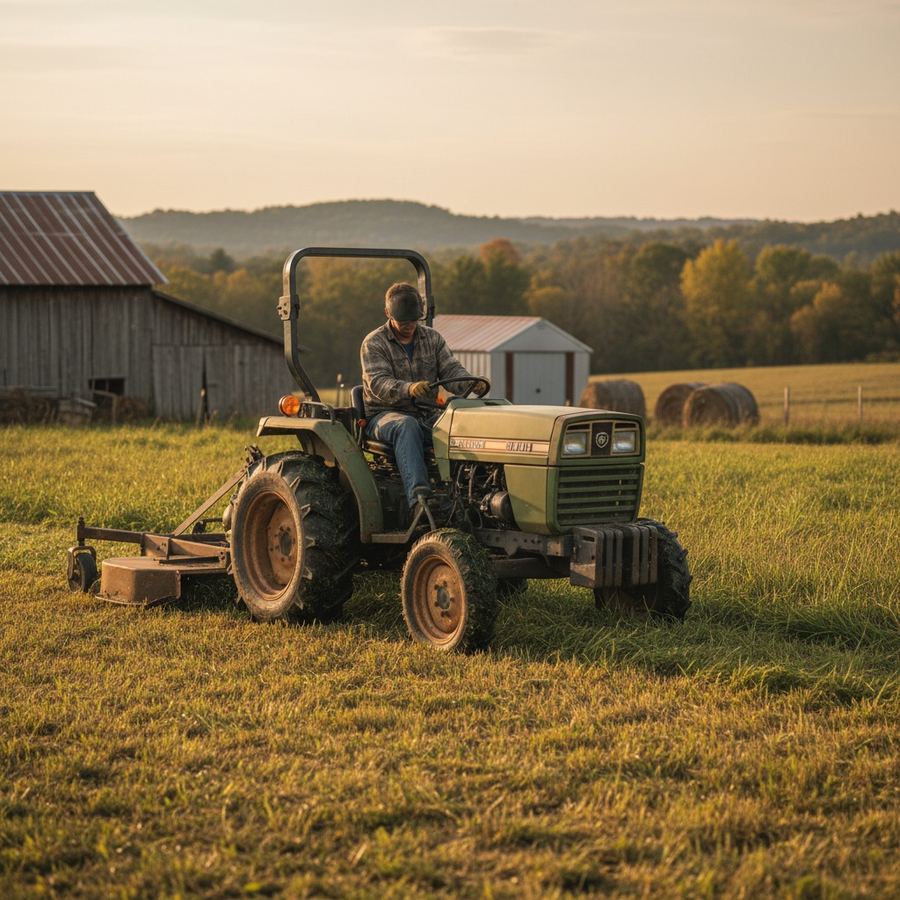
Compact tractors are 25 to 45 PTO horsepower, weighing 2,500 to 4,000 pounds. This is where most acreage owners land. A JD 3038E, a Kubota L3301 or L3901, a Massey Ferguson 1735M, a New Holland Workmaster 35. They handle a 5 or 6 foot rotary cutter, a 6 foot box blade, a 6 foot rear blade, a loader with 1,500 to 2,200 pounds of lift capacity, a 4 or 5 foot tiller, and light hay equipment including a sickle bar mower and a small rake.
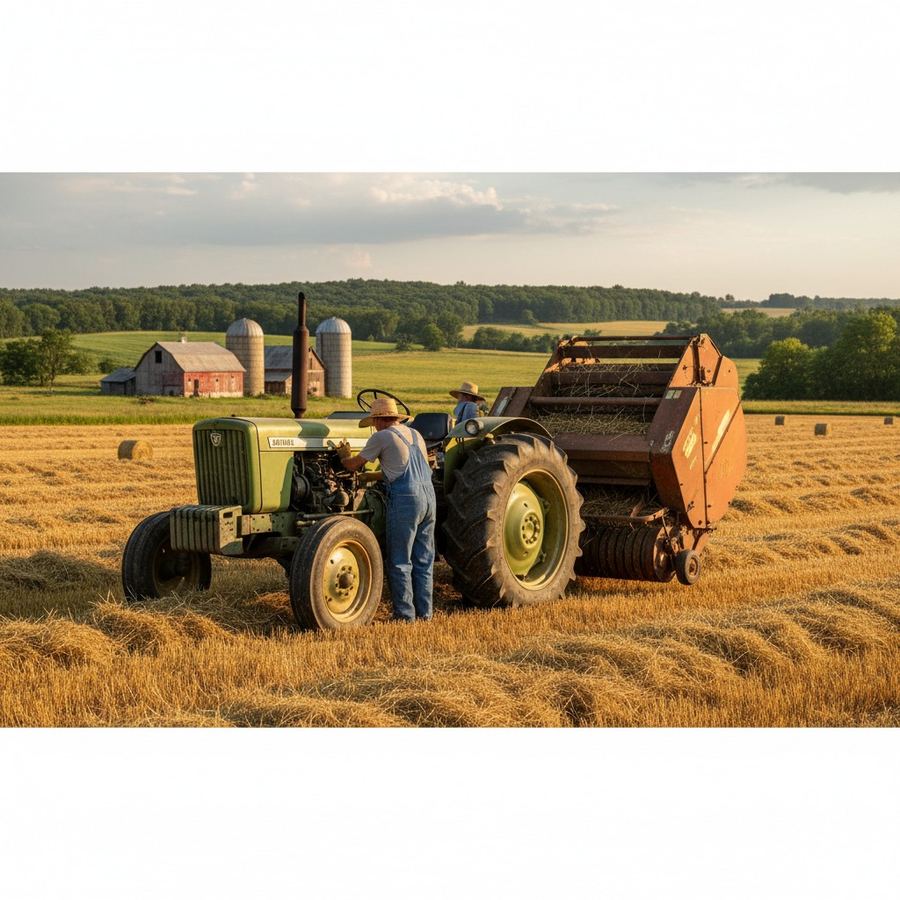
Utility tractors run 45 to 75 PTO horsepower, 4,500 to 7,500 pounds. A Kubota M5660, a JD 5075E, a Case IH Farmall 75A, a used Ford 5000 or JD 2840. These handle real hay equipment: a 7 or 8 foot disc mower, a 9 wheel rake, a small round baler making 4x5 bales. They pull a 3-bottom plow, a 10 foot disk, and a 3 point post hole digger with a 12 inch auger through hard clay. This is a working farm tractor, not a hobby machine.
Mid-size row crop and utility tractors at 75 to 110 PTO horsepower weigh 7,500 to 11,000 pounds. An IH 1066, a JD 4440, a Case IH 7140, an Allis 7000-series. These are the tractors that built American agriculture through the 1970s and 1980s, and they are still the right answer for a serious hay operation, a mixed livestock farm with 100 plus acres of ground to work, or anyone running tillage implements that need real pulling weight.
Acreage Rough Guide
Under 5 acres with light chores, no hay, no tillage, just mowing and occasional dirt work: sub-compact is enough. A JD 1025R or Kubota BX2680 will do everything you legitimately need, and the small footprint means you can get into tight spaces between outbuildings.
5 to 20 acres with pasture mowing, some food plot work, a loader for firewood and gravel: compact is the sweet spot. A 35 to 40 PTO horsepower machine like an MF 1735M or a JD 3038E handles the work without being oversized for the space. You can still navigate narrow gates and the fuel bill is manageable.
20 to 50 acres with some hay production, more serious loader work, a small livestock operation: compact utility or small utility. 45 to 60 PTO horsepower. A Kubota M5660 or a JD 5055E will run a small square baler, a 6 or 7 foot disc mower, and a decent manure spreader. Do not undersize here. A 30 horsepower compact trying to pull hay equipment through heavy grass will overheat, slip the belt, and wear out the clutch.
50 to 100 acres with hay, tillage, and real work: utility at 60 to 90 PTO horsepower. A Kubota M7060, a JD 5090M, or a good used JD 4440, IH 886, or Case IH 7110 from the 1980s. These older machines are heavy enough to handle real implements and simple enough to repair without a dealer's diagnostic laptop.
100 plus acres with serious row crop or hay production: 90 to 130 PTO horsepower, which is the JD 4440, IH 1066, Case IH 7140, Allis 7000-series territory. Buy old and maintained rather than new and financed, because a clean 4440 with 6,000 hours will outwork a brand new 100 horsepower compact every day of the week and leave money in the bank for implements.
The Implement-Driven Rule
Pick your implements first, then pick a tractor that can run them. Every PTO implement has a minimum horsepower rating. A 6 foot rotary cutter in moderate grass wants 25 PTO horsepower minimum and is happier with 35. An 8 foot disc mower wants 45 PTO horsepower. A 4x5 round baler wants 45 to 60 depending on the model. A 12 foot field cultivator pulled through hard ground wants 80 engine horsepower of pulling weight, not PTO horsepower.
Look at everything you plan to run, find the implement with the highest PTO or drawbar requirement, and size the tractor to that. Then add 15 to 20 percent headroom for wet conditions, tall grass, or the rainy day when you need to push through something the spec sheet did not plan for. Sizing exactly to the minimum leaves you with a tractor that can do the job once and is worn out by the fifth time.
Loader Weight and Tractor Weight
A front end loader is only as useful as the tractor is heavy. A loader rated for 1,800 pounds of lift on a 3,500 pound tractor will tip the back wheels off the ground the first time you scoop a full bucket of wet sand. Rear ballast (a filled rear tire, wheel weights, or a heavy 3 point implement) is not optional on a loader-equipped tractor. The rule of thumb is that the combined weight of the tractor plus rear ballast should be at least 125 percent of the maximum loader lift capacity, measured at the tractor rear axle.
Practically, if you are buying a compact to do significant loader work, either look for a heavier compact in the 3,500 to 4,500 pound range or plan on $400 to $800 worth of rear ballast. A 2,800 pound sub-compact with an aggressive loader is unstable on anything but flat ground.
Do Not Oversize for Prestige
The common mistake is buying the biggest tractor you can afford because it looks serious. On 20 acres of mixed pasture and woodlot, a 90 horsepower utility tractor will be miserable to park, expensive to fuel, hard to turn in tight spots, and will compact your pasture every time you drive it. A 40 horsepower compact will do every real task and slip through the gate to the back field without a five point turn.
The USDA Natural Resources Conservation Service has practical guidance on soil compaction and grazing land management, worth a look if you are running livestock on smaller acreage and trying to figure out whether a heavier tractor is actually right for your ground (see nrcs.usda.gov).
Putting It Together
Write down your acreage, your terrain, and the three or four implements you actually plan to run. Not the ones you might buy in ten years. The ones you will hook to the tractor in the first six months. Pick the tractor horsepower that handles the heaviest of those implements with 20 percent headroom. Then go look for that specific size range on the used market.
Once you are ready to inspect candidates, our checklist for how to inspect a used tractor before buying will walk you through what to check in person, and our guide to what hours matter on a used tractor explains why the hour meter alone should not scare you off or pull you in. If you are looking at an older machine, also read what to check on older diesel tractors before you commit. The right tractor at the right size, bought carefully from the used market, will outlast your interest in farming.