The salesman at an independent used lot in central Illinois told a buyer the 8640 out front had been "on the place since new" by a one-owner farm. Turned out to be partially true. The farmer had bought it new in 1983, run it for 27 years, and traded it to a Case IH dealer in 2010. That dealer sold it at an AuctionTime listing in 2016. Another dealer bought it there, flipped it to a third dealer in 2022, and now here it sat. Every one of those transitions is a place where something could have been hidden, patched, or quietly written off. Asking the right questions up front is how you figure out which kind of tractor you are actually looking at.
Dealer buying is not just about inspecting the machine. It is about interviewing the seller. Here is the list of questions worth asking, and why each one matters.
Where Did This Unit Come From?
Start with origin. "Where did you get this tractor?" is a simple question that tells you a great deal. A machine that came in as a trade from a known local farm has a provenance the dealer can usually verify. A machine that was bought at auction has a blank history before the hammer fell. Neither is automatically bad, but the latter requires more inspection and more skepticism.
Follow up with: "Was it a one-owner trade?" If yes, ask the follow up: "Can I talk to the previous owner?" Dealers often will not give out names, but if they are willing to make a call for you, that is a strong signal the unit is clean. If they immediately redirect the conversation, treat the history as unknown.
How Long Has It Been on Your Lot?
A tractor that arrived last week is a different conversation than one that has been sitting for eight months. A week-old unit has not been inspected by anyone yet, including the dealer's own shop. An eight-month unit has either been passed over by every buyer in the region or is priced above what the market will pay. Both of those are worth understanding.
The sweet spot is usually 30 to 90 days. Long enough for the dealer's shop to have looked at it, short enough that the price is still realistic and the machine has not been sitting outside through a winter of water intrusion.
Did Your Shop Inspect It or Just Lot-Check It?
This is the question most buyers never think to ask. There is a huge difference between "our mechanic pressure-washed it and drove it onto the lot" and "our mechanic put it on the lift, pulled the filters, checked the hydraulic pressure, and logged everything." OEM certified used programs require the full inspection. Independent lots vary wildly.
Ask to see the inspection report. If there is one, it should list what was checked, what was found, and what was fixed. If there is not one, the dealer is telling you the machine was not actually inspected, regardless of how they phrase it.
What Did You Fix Before Listing It?
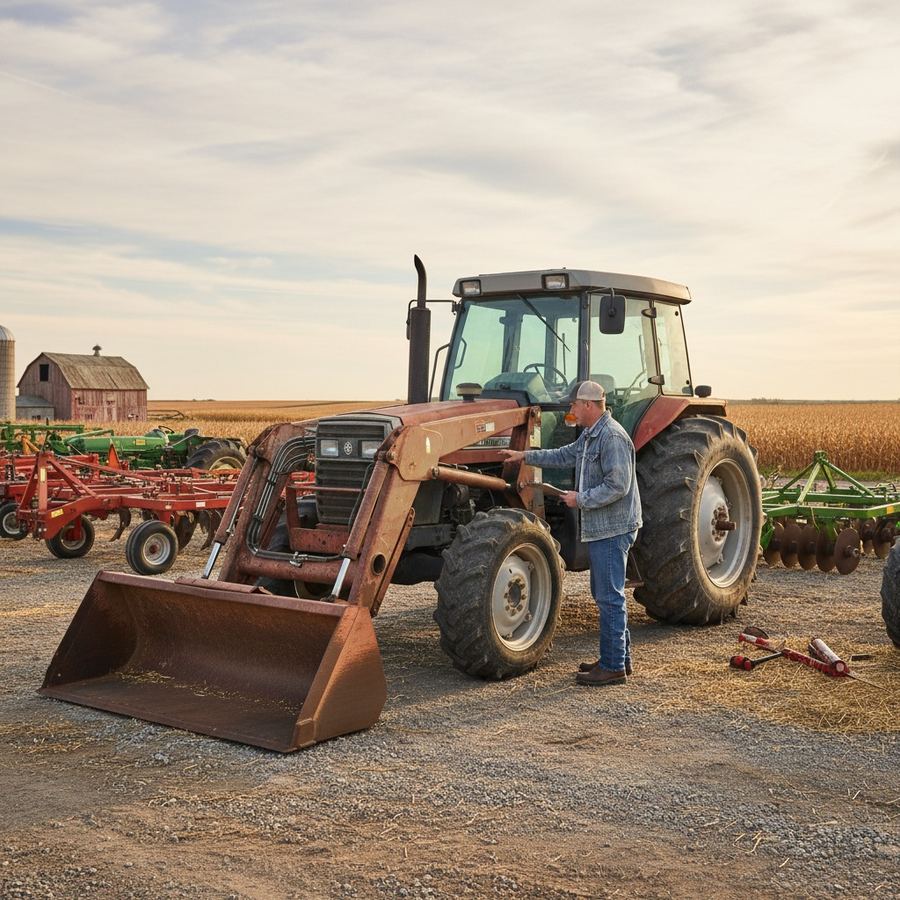
Directly related. Ask what work the dealer did between intake and sale. A good dealer will tell you: "We replaced the front hub seals, rebuilt the PTO clutch, and put a new battery in it. Everything else was serviceable." A bad dealer will say "nothing needed" on a 30-year-old tractor, which is either dishonest or reflects zero inspection.
Also ask what they found but did not fix. "We noticed the hydraulic remotes are a little slow but the owner wanted it priced cheap." That kind of disclosure is worth real money in buyer trust. It also lets you negotiate against the known issue rather than getting surprised by it later.
What Warranty, Exactly?
Warranty is where a lot of buyers get vague answers and accept them. Pin it down. Ask the dealer to walk you through hydraulic problems worth checking and confirm which of those are covered. Ask:
- How long is the warranty in days or hours, whichever comes first?
- What components are covered? Engine only? Engine and transmission? Final drives? Hydraulics?
- Where does the warranty work have to be performed? Your shop? Any OEM dealer? Any shop at all?
- Is there a deductible or labor cap per claim?
- Is the warranty transferable if I sell the machine?
Deere and Case IH certified used warranties are the most structured and usually the most generous, covering engine and powertrain for 6 to 12 months on qualifying machines. Independent dealer warranties range from 30 days engine only to 90 days full drivetrain. Get it in writing on the bill of sale, not as a verbal promise.
What Is Your Trade-In Policy?
If you are bringing a tractor to trade, ask how they evaluate it. Do they send someone to look at it on your farm? Do they require you to deliver it? Do they blackbook it or actually inspect it? Trade appraisals vary by $3,000 to $8,000 on common row crop tractors depending on how the dealer handles the process. A sight-unseen phone appraisal is almost always low, because the dealer is protecting themselves against surprises.
Also ask whether trade value changes if you finance versus pay cash. Some dealers shift money between trade allowance and sale price depending on how you fund the deal. Work the whole deal in writing with trade, sale price, and total out the door all visible together.
Delivery, Pickup, and Setup
Ask what delivery costs. Most dealers deliver free within a radius, then charge a per-mile or flat fee beyond that. Ask if loader attachments, weights, or duals come off for transport and whether they reinstall on delivery. These small things can add $200 to $600 if not discussed up front.
For a tractor with an attached loader or a 3-point implement, ask if they will set it up and demo basic operation when delivered. A 15-minute walk-through from the delivery driver is worth having.
Is the Hour Meter Original?
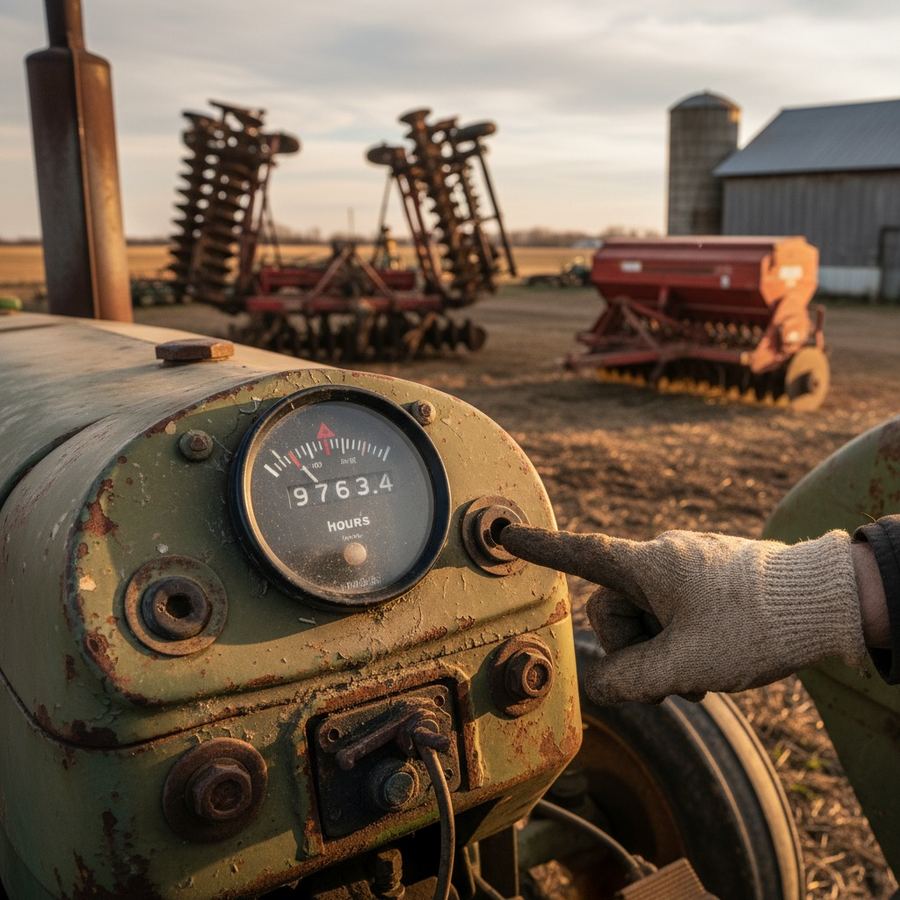
Ask directly: "Has the hour meter ever been replaced, and if so, at what hours?" Older tractors often had meters replaced, and that is fine if it was disclosed and documented. The dealer should know, and on machines with service records it will be in the file. If the dealer does not know and has no records, treat the stated hours as approximate at best. We cover this in more detail in what hours really mean on a used tractor.
Can I Start It Cold Tomorrow Morning?
Anyone can start a tractor after the sales lot has warmed it up in the shop. A cold start at 6 AM in January tells you about glow plugs, fuel delivery, injector health, and how much blow-by the engine has. Reasonable dealers will let you come back first thing to watch a cold start. If the answer is no, or "we already started it this morning," assume you are not being shown the worst case.
On older diesels specifically, a cold start reveals a lot that a warm start hides. The things worth checking on older diesels should all be done with the engine cold first.
Is There a Return Window or Test Period?
Most dealers will not offer a true return policy, but some will offer a short test period of a few days or a few hours of operation with the understanding that any major undisclosed issue found in that window is grounds for return or credit. Ask. You may be surprised. On certified used programs especially, there is sometimes a satisfaction window baked in.
If there is no return policy at all, that is fine, but it raises the stakes on the pre-purchase inspection. Do not skip the inspection because the dealer is telling you the machine is great. Their job is to sell it. Your job is to verify it, using the walk-through steps in our pre-purchase inspection guide.
Walking Away From the Wrong Answers
You are allowed to leave. If the answers are vague, defensive, or openly inconsistent, the price is not enough to make up for it. There are always more tractors. The dealer knows this too, which is why a good one answers these questions without flinching. The bad ones either dodge or get irritated, and that irritation is a feature of the interaction, not a bug. It tells you exactly what you needed to know.
Working through this list takes 20 minutes. Getting it wrong can cost you $15,000. The math on that trade is not hard.