A retired dairy farmer in Wisconsin needed to move a 2006 New Holland TS115A with 4,100 hours and a loader by March so his accountant could close out the farm LLC. He priced it privately on MachineryPete at $42,000 for six weeks, got three tire-kickers and no offers. He put it on consignment with a Case IH dealer at $44,900, where the dealer washed it, touched up the paint, and moved it in 19 days for $43,500. After the 15 percent commission he netted $36,975. A Steffes timed auction ran the same month and comparable units sold there for $37,000 to $39,000 hammer, roughly the same net after selling fees. His private sale at $42,000 would have cleared him the most money, if he could have found a buyer. He could not, and time was the binding constraint.
Every selling channel has a different trade between price, speed, hassle, and certainty. If you are deciding how to move a piece of equipment, start with which of those four matters most for your situation, then pick the channel that fits.
Direct Private Sale
Selling directly to another farmer is the highest-gross option on paper. There is no commission, no buyer's premium, no dealer markup between you and the buyer. You list on TractorHouse, AuctionTime's for-sale side, MachineryPete, Facebook Marketplace, or regional classifieds, and you handle everything yourself.
The catch is everything else. You write the description, you take the photos, you answer the phone at dinner, you schedule inspections with buyers who may or may not show up, you deal with tire-kickers asking lowball questions, you negotiate, you arrange payment, you handle the bill of sale and any title work, and you eat the risk of a deal falling apart after a verbal agreement.
Time to sale is the biggest variable. A well-priced popular model in a farming region can move in a week. An oddball machine or one priced above market can sit for six months. During that time you are still paying insurance on it, it is still sitting outside collecting weather, and you are still fielding calls.
Private sale works well when you have time, patience, and a machine buyers actively want. It works poorly when you are on deadline or the market for that particular unit is thin.
Dealer Consignment
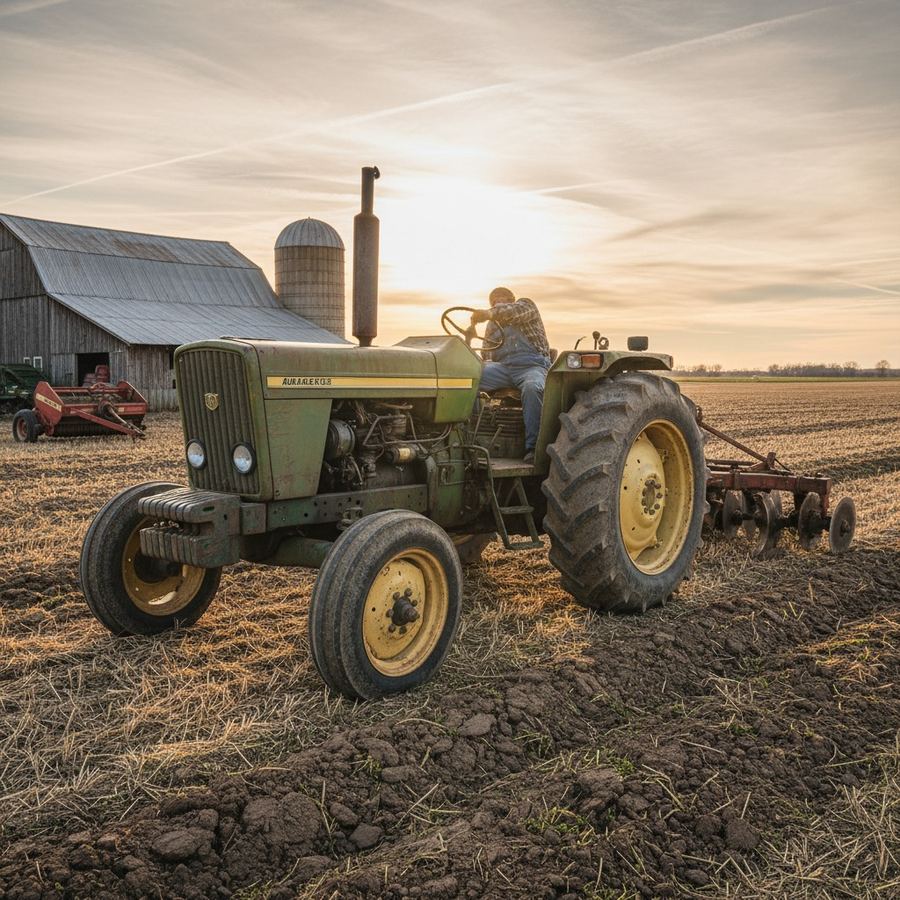
Consigning to a dealer means the dealer takes physical possession of your equipment, puts it on their lot, markets it through their normal channels, and pays you out minus a commission when it sells. Commissions typically run 10 to 20 percent depending on the dealer, the machine, and how much prep work they put in. OEM dealers who do full reconditioning tend toward the 15 to 20 percent end. Independent lots doing minimal prep may come in at 10 to 12 percent.
The upside is real. A dealer lot gets more foot traffic in a week than your farm driveway will get in a year. The dealer will photograph the machine properly, write a clean listing, wash and touch up minor cosmetics, and sometimes replace consumables like batteries or hoses at their cost to move it faster. A tractor that looks shabby on your place will often look $3,000 to $5,000 better after a dealer has cleaned it up and parked it under good lighting. This is the "dressed up at the dealer" effect, and it is not cosmetic only. It shifts buyer perception measurably.
Ask the dealer specifically: do they floor the machine and pay you up front, or pay you after sale? Is the consignment agreement exclusive, meaning you cannot list it elsewhere during the term? What happens if it does not sell in 60 or 90 days? Do they reserve the right to lower the asking price without your approval? All of these go into writing. A good consignment contract is not scary. A vague verbal consignment is.
Auction Consignment
Consigning to an auction is different from consigning to a dealer. You deliver the machine to the auction yard by a deadline, the auction company catalogs it, photographs it, lists it on their platform, and sells it to the highest bidder on sale day. Commissions for sellers at auction typically run 6 to 12 percent on equipment, sometimes less on high-value items. The buyer also pays a buyer's premium which does not come out of your pocket, but does affect what buyers are willing to bid in the first place.
Auction consignment is the fastest way to convert equipment into cash with certainty. If you consign to a sale running in three weeks, you know exactly when the money arrives. Most auction companies pay out 7 to 14 days after the sale. This is why estate settlements, farm retirements, and bankruptcy liquidations use auctions almost exclusively. Certainty of timing is worth a lot.
The downside is you do not get paid a premium for a well-restored machine. Auctions reward what buyers see on sale day, and a freshly repainted unit with new tires may bring only marginally more than a tired one sitting next to it. Buyers at auction are pricing in their own risk, and they discount anything they cannot verify. If you have invested $8,000 in a rebuild, you will see maybe $2,000 of that back at auction. For that reason, do not put restored or show-quality equipment through a no-reserve auction unless you are willing to accept that the market does not care about the restoration the way you do.
Reserve auctions exist but they are less common and some houses will not take them. If you want a floor, negotiate it into the consignment contract before you deliver the machine.
Trade-In to a Dealer
The simplest option is trading your old machine in on your next one. The dealer takes your unit as partial payment toward something on their lot, you sign one set of papers, and you are done. No photos, no listing, no waiting, no tire-kickers.
It is also the lowest-gross option in almost every case. Trade-in values are typically 20 to 35 percent below what you could get from a direct private sale on the same machine. The dealer is pricing in their resale margin, their reconditioning cost, their warranty exposure, and their holding time. That spread is not unreasonable from their side, but it is money off your top.
The counter-argument is that trade-in can come with tax advantages in some states. Many states allow sales tax to be calculated only on the difference between the new purchase price and the trade-in value, meaning a $40,000 trade saves you sales tax on that full amount. On a $150,000 new purchase in a state with 6 percent sales tax, that is $2,400 back in your pocket. Run the math for your state. Sometimes the trade-in actually wins once tax is included.
Tax Timing and Farm Operations
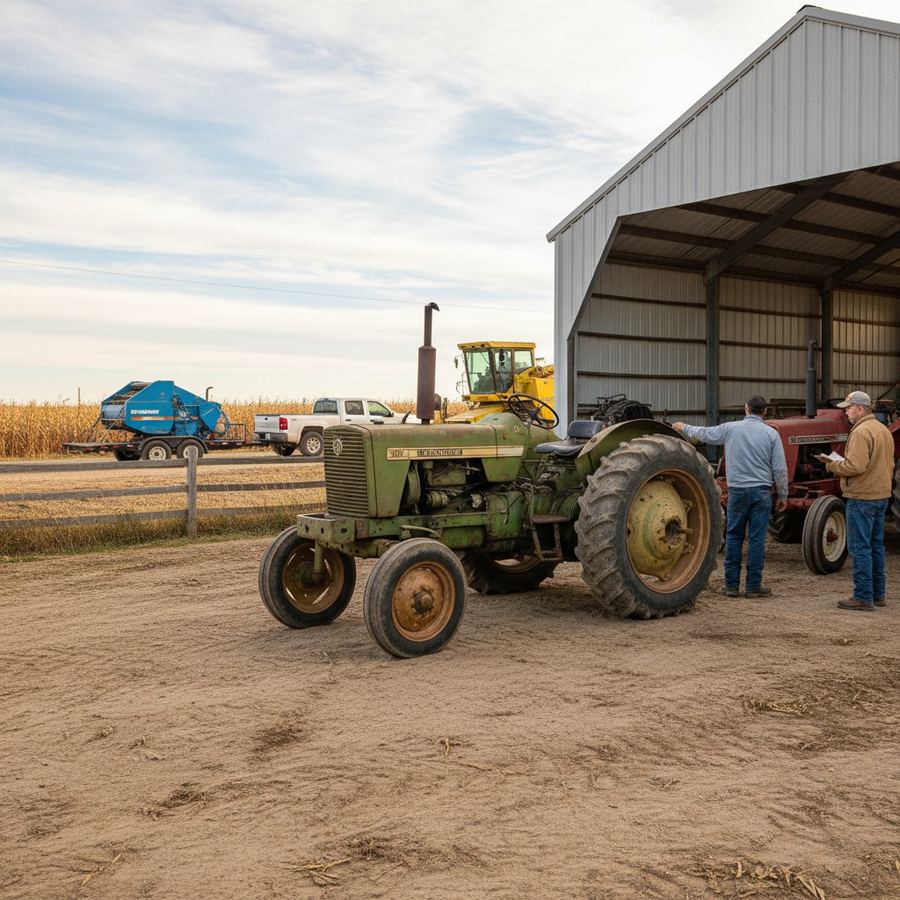
For operating farms, the timing of a sale matters as much as the channel. Section 179 depreciation recapture, income smoothing, and end-of-year capital gains considerations all push farmers toward specific months for major sales. Talk to your accountant before you commit to a channel, not after. A sale that lands in the wrong tax year can cost more than a bad commission rate would have.
Estate and retirement situations often have their own timing pressures. Executors want everything converted to cash quickly. Retirees want the farm lot cleared before winter. These constraints usually push toward auction or dealer consignment rather than patient private sale.
Choosing the Right Channel
Rough rules that work for most situations:
- Have 60-plus days, a desirable machine, and patience? Private sale nets the most.
- Need to sell within 30 days with certainty and do not want the hassle? Auction consignment.
- Have a clean machine that will benefit from presentation and want a middle-ground option? Dealer consignment.
- Buying something new and want the simplest transaction? Trade-in, and run the tax math.
- Have restored or show-quality equipment? Private sale or a reserve consignment only. Do not give it to a no-reserve auction.
Thinking about this from the buyer side at the same time is worth doing. Buyers reading how auctions differ from dealer purchases and watching for red flags in listings are the same people who will eventually be looking at whatever you list. If you understand what they are looking for, you can present the machine in a way that matches what serious buyers want to see. That is true whether you list it yourself or hand it to a dealer. Transparency and clean documentation sell equipment faster than paint and pressure washing ever will, a theme we return to in how dealers photograph and list equipment.
There is no universally best channel. There is only the best channel for a given machine, a given seller, and a given deadline. Get those three things right and the numbers usually work out close to what the market owes you.