A 1998 JD 7810 with 6,200 hours sold for $38,500 at a Sullivan Auctioneers retirement sale last fall. A comparable unit sat on a Deere certified used lot two counties over at $52,900 with a 90-day powertrain warranty. Same tractor on paper. Roughly $14,000 apart. Whether the auction buyer got the better deal depends on about a dozen things most people never think about until the machine is already in their yard.
Auctions and dealer lots are not interchangeable ways of buying the same iron. They are different transactions with different risks, different total costs, and different types of buyers. If you understand how each one actually works, you stop comparing them on sticker price alone and start comparing them on what you are really getting.
The Three Kinds of Auction You Will Actually Run Into
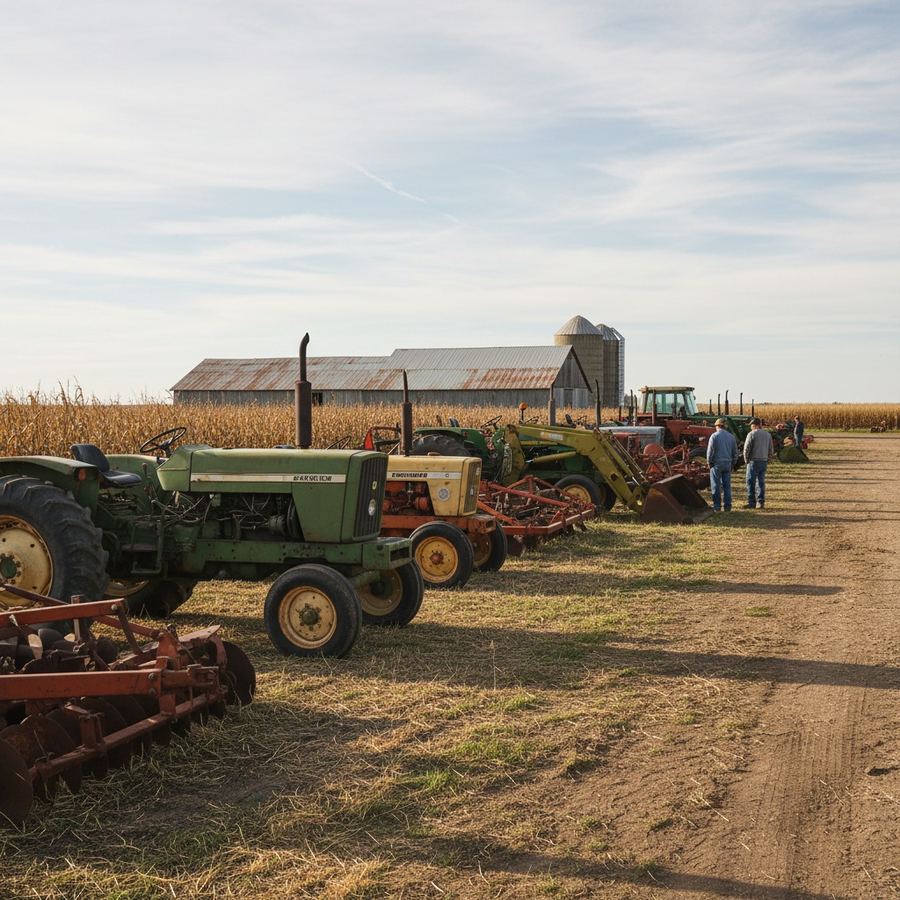
Live on-site auctions are the traditional format. An estate sale, a farm retirement dispersal, or a bankruptcy liquidation. You show up the day before or the morning of, walk the rows, start engines if the clerk lets you, bid in person or by proxy. These sales still run through houses like Sullivan Auctioneers, Steffes, and a dozen regional firms. The advantage is hands-on inspection time and the ability to read the crowd. The disadvantage is you have to be there, and transport logistics for a tractor you might not win are a pain.
Online-only platforms run the other extreme. Big Iron, AuctionTime, and Iron Search list machines from sellers all over the country, run a timed auction, and you bid from your phone. You may never see the tractor in person before buying. Some sellers allow pre-bid inspections by appointment, most do not enforce it, and plenty of buyers pull the trigger based on photos and a phone call with the consignor. Prices here are often a little softer than live sales because the inspection friction scares off local buyers who would have paid more in person.
Hybrid timed auctions are the middle ground. A physical yard, a posted preview day, and then a timed online close. Steffes runs a lot of these. You get inspection access if you make the drive, but the bidding itself is online and extends every time someone places a late bid. They tend to pull higher final prices than pure online sales because the inspection option gives serious buyers confidence.
Dealer Lots: OEM Certified Used vs Independent
Dealer purchases break into two main groups. OEM certified used programs from Deere, Case IH, Kubota, New Holland, and Massey dealers put used units through a defined inspection checklist, apply minor reconditioning, and attach a short powertrain or full-machine warranty. You pay for that peace of mind in the sticker. A certified used 8R from a Deere store will run 15 to 25 percent higher than the same model at a retirement auction, and the dealer will make no apologies for that spread.
Independent used dealers are the other flavor. They buy from auctions themselves, from trade-ins, from farmer-direct sales, and resell with varying levels of prep. The good ones are honest brokers who know their local market cold. The bad ones wash and paint problems onto the next buyer. Warranties from independents are usually 30 to 60 days if offered at all, and the fine print matters. Read it before you sign.
Price Comparison, Done Honestly
The common rule of thumb is auctions run 10 to 25 percent below dealer retail on comparable machines. That is roughly true but it hides a lot. A few things eat into that spread fast:
Buyer's premium. Online auctions typically add 5 to 12 percent on top of the hammer price. Live sales are often lower, sometimes 3 to 5 percent, sometimes nothing for cash or approved check. Always calculate your real cost with the premium included before you bid. A $40,000 hammer at a 10 percent premium is $44,000 before you have moved the tractor an inch.
Transport. A dealer will often deliver within 100 miles for free or a flat fee. From an auction yard three states away, you are paying a hauler $2 to $4 per loaded mile for a wide load, plus permits on oversize configurations. Budget $1,500 to $3,500 for meaningful distances.
Sales tax and titling. Some states collect sales tax at auctions, some do not. Dealers collect it every time. Farm exemption paperwork can save it on either side if you actually qualify.
Repair exposure. The dealer machine comes with some kind of warranty, even if it is just 30 days powertrain. The auction machine is as-is, where-is, meaning the minute the hammer drops it is your problem. A cracked block or a blown final drive you did not spot in the inspection walk is absorbed entirely by you.
Run those four lines through the numbers and a lot of the auction discount disappears. Sometimes all of it. Sometimes more than all of it.
What Inspection Access Really Looks Like
At a dealer lot you can walk around the machine as long as you want, ask the shop to pull it inside, request a cold start, ask for service records, and sometimes get a loader demo in the back lot. The dealer wants the sale and will accommodate reasonable requests.
At a live auction you typically get the morning of the sale and maybe the day before. Engines may or may not be started depending on the auctioneer's rules. PTO and hydraulics are usually not demonstrated. You can climb in the cab, check fluids, look for the things we cover in our used tractor inspection walkthrough, but you are working fast and in a crowd.
At an online-only auction you are often looking at 12 to 30 photos, a short description, and a phone number. Pre-bid inspection means driving to wherever the machine is sitting, which most buyers do not do. This is why online auctions tend to have the biggest post-sale disappointment rate. It is also why they can be the cheapest.
What "As-Is" Really Means
As-is, where-is is not a polite phrase. It is a legal position. It means the seller makes no warranties, express or implied, about condition, fitness for purpose, or mechanical operation. If the transmission grenades on the ride home, that is your tractor and your problem. If the hour meter is wrong, that is your tractor and your problem. If the previous owner disclosed nothing because no one asked, that is still your problem.
Auction companies will sometimes help mediate egregious misrepresentation by a consignor, but the bar is high and the process is slow. Plan as if you have zero recourse, because for most disputes you effectively do. This is why experienced auction buyers know the red flags in listings cold and walk on anything with a story that does not add up.
Payment Terms and Timing
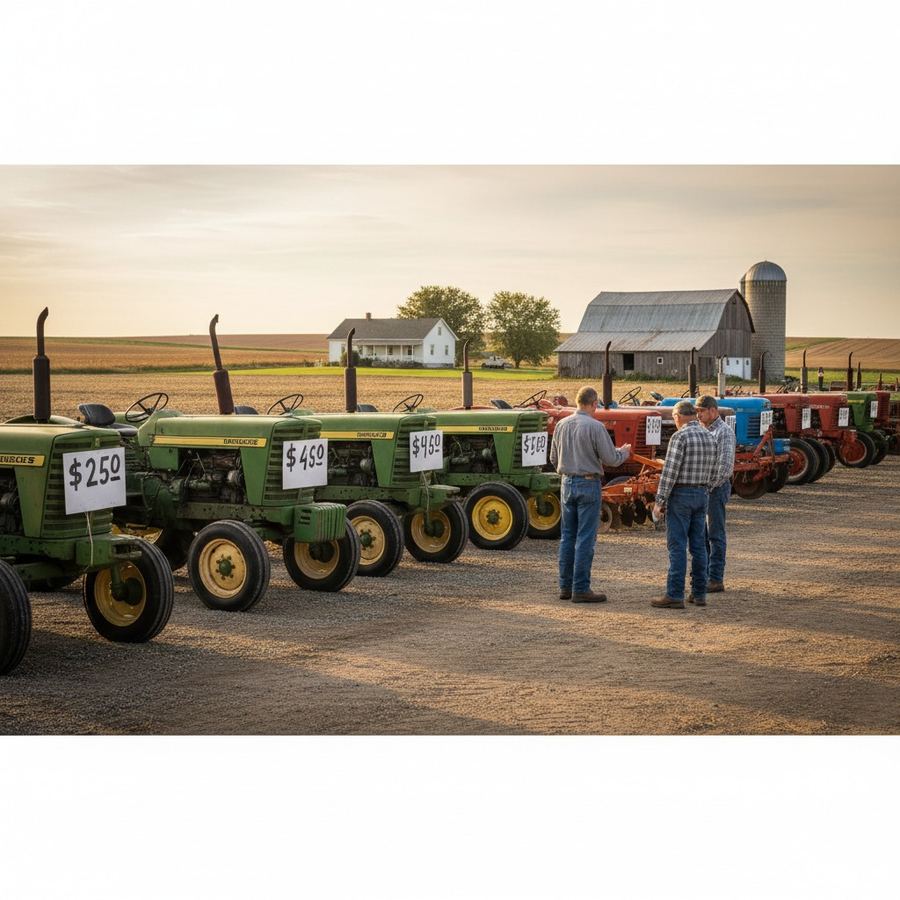
Dealers will finance, trade, and wait. If you need a week to get approved or sell your current unit first, a dealer will usually hold the machine with a deposit. Financing through the OEM captive lender is often competitive with any bank you could walk into.
Auctions want their money, and fast. Most require full payment within 24 to 72 hours of the sale, sometimes with wire or cashier's check only. Financing an auction purchase is possible but you generally need it lined up before you bid. Third-party ag equipment lenders will pre-approve you for a bid ceiling. Showing up hoping to get approved after you win the machine is how people lose deposits.
Auction Fever Is Real
The single most common expensive mistake at live auctions is bidding past your walk-away number because the pace and the crowd pull you along. Set a max before the sale, in writing, with the buyer's premium and transport already added in. When the bidding passes that number, stop. The next lot is ten minutes away.
Auction fever at online sales is different but just as real. Sniping in the final 30 seconds with auto-extend bidding turned on can push a price 15 percent above what a calm buyer would have paid. The best defense is a max bid set early and left alone.
Which Channel Fits Which Buyer
Auctions work well for experienced operators who can inspect a machine on their feet in 20 minutes, who have a trailer or a hauler on speed dial, and who can absorb a surprise repair without breaking the operation. Retirement dispersal sales in particular tend to have well-maintained one-owner iron with traceable history, which is why serious buyers show up at them.
Dealer purchases work well for buyers who want warranty coverage, trade-in credit on their existing equipment, financing through the dealer, and a shop they can call when something breaks in the first season. The right questions at the dealer matter just as much as the right inspection at an auction.
Most farms end up using both channels depending on what they are buying. A tillage tool with nothing mechanical to go wrong is a good auction candidate. A 20-year-old row crop tractor you plan to run 600 hours a year is arguably better from a dealer who stands behind the powertrain. There is no universal right answer, only the right answer for a given piece of iron and a given buyer. Start with the total-cost math, not the sticker.