Walk any farm sale in the Midwest and there is still a line of row crop tractors waiting to change hands: a pair of 4020s with faded yellow hoods, a 1066 with a cab that smells like forty years of dust, maybe a 7140 Magnum that the family finally admitted they were not going to use on the back eighty anymore. Row crop tractors built between 1965 and 2000 make up the backbone of the used market because they were built in huge numbers, they were built to last, and the guys who own them tend to take care of them. What changes from year to year is what buyers are willing to pay, and what they are willing to forgive.
What actually makes a tractor a row crop
The term "row crop" comes from the old configuration: tall crop clearance, adjustable rear wheel spacing to straddle rows, and either a tricycle narrow front or an adjustable wide front axle. A 4020 with a narrow front is the classic image, but by the mid 70s the adjustable wide front was the dominant choice for anyone who did not want to wreck a tractor on a sidehill. By the 80s, the category had shifted to mean something closer to "mid to large frame tractor, usually 80 to 180 PTO horsepower, with enough clearance for cultivating corn or beans, and almost always ordered with a cab." Today, anything in that size and configuration gets called a row crop whether it spends its life in row crops or on hay ground.
For a used buyer, the practical definition is simpler: a row crop tractor is too big and too tall for most chore work, rides rougher than a utility, and is priced by field-ready horsepower rather than loader capacity. If you are pulling a 15 foot disk or running a 6 row planter, this is your aisle.
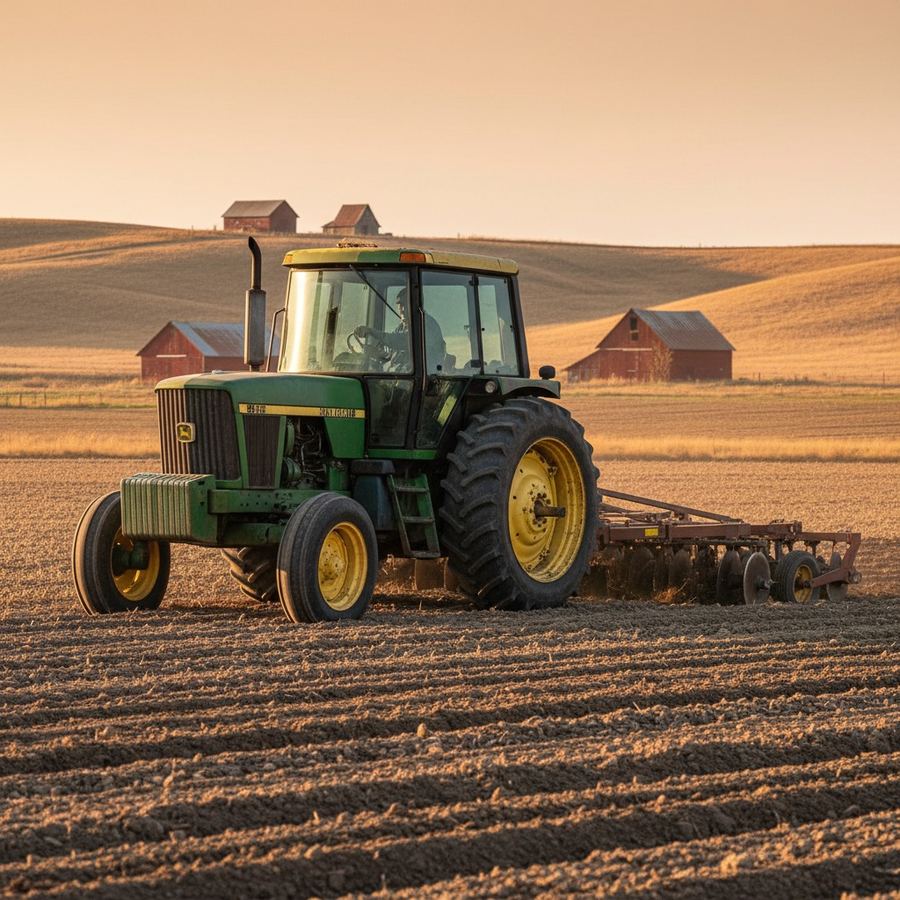
The 70s: 4020, 4440, and the IH 66 series
The John Deere 4020 is still the most traded used row crop in the country, which is astonishing for a tractor that went out of production in 1972. The reasons are exactly what you would guess: simple syncro or powershift transmission, a bulletproof 6-cylinder 404 cubic inch diesel, parts shelves full of everything from injector pumps to throwout bearings, and a resale floor that just will not drop. A clean 4020 diesel powershift with good rubber and a strong PTO typically runs $12,000 to $22,000 depending on sheet metal and hours. The narrow fronts trade slightly lower than adjustable wide fronts because nobody wants to flip one off a ditch bank.
The 4440 replaced the 4430 in 1978 and is arguably the best used Deere in the 130 horsepower class ever built. Sound-Gard cab, intercooled turbo 466 cubic inch diesel, Quad-Range transmission, and a genuine reputation for going 10,000 hours before a major overhaul if the oil got changed. The common gripes are predictable: the Sound-Gard cab corner posts rust where the glass meets the frame, the heater cores leak, the blower motors die, and the air conditioning usually needs a conversion to R-134a by now. None of that is a deal breaker. A 4440 with 7,000 hours, a solid top end, working 3 point, and a cab that does not rattle will bring $18,000 to $30,000 in most markets. A tired one with hydraulic leaks and a blown turbo can be had for under $12,000 if you are willing to put money into it.
International Harvester's 66 series showed up in 1971 and ran through 1976, and the 1066 is the one everybody wants. It came in gear drive (the preferred version for resale) and a hydrostatic version that is polarizing. The "black stripe" 400 horsepower marketing referred to the turbo 414 cubic inch motor, which is a strong engine but known for cracked heads if overheated. Gear drive 1066s with a straight frame and a decent torque amplifier bring $10,000 to $18,000. Hydro 1066s sell for less because the hydro pump is expensive to rebuild and the hydro itself tends to wander under heavy draft load. If you see a Hydro 1066 at a sale for under $7,000, check the hydro oil for metal before you raise your hand.
The 80s and 90s: Magnums, MXs, and the big Deeres
The Case IH 7140 Magnum, introduced in 1987, was a leap forward in how a row crop tractor felt to operate. An 18 speed powershift, 180 PTO horsepower from a 505 cubic inch motor, and a cab that was genuinely comfortable compared to anything from the 70s. The 7140 and its 7110, 7120, 7130 siblings are well liked by guys who run them, but the early Powershift had some reliability issues that were largely fixed by 1991. A 7140 with a clean powershift that shifts crisply and does not bark between gears is worth $20,000 to $38,000 depending on hours. One with a lagging shuttle or a clutch pack slipping under load is a different conversation. Always cycle the full range of the powershift under load during an inspection.
John Deere's 4055, 4255, 4455 and then the 4560, 4760, 4960 of the early 90s are widely considered the sweet spot of pre-electronic row crops. They had the Sound-Gard II cab, a refined version of the 466, and were simple enough that an owner-operator with a wrench could still fix most of what broke. By the time the 8000 series arrived in 1994 the electronics got more complicated and the price floor got less forgiving for buyers who are not comfortable with CAN bus diagnostics.
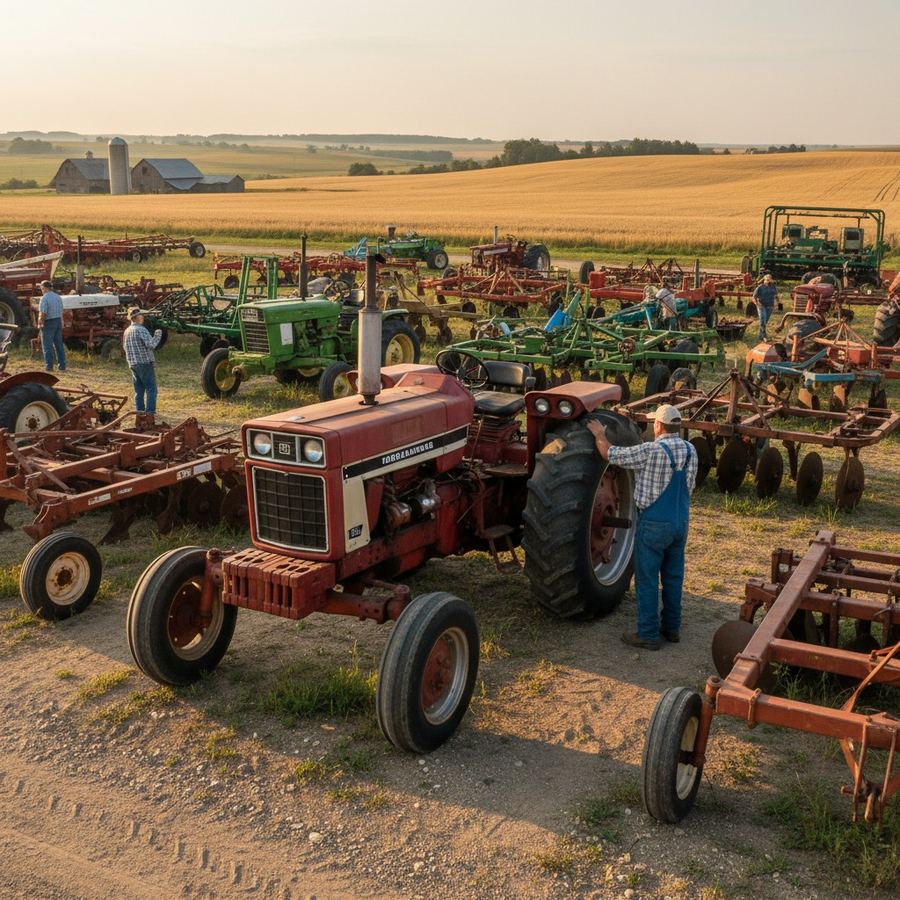
What to specifically inspect on a row crop
Row crop tractors share the usual older diesel concerns (covered in the guide on older diesel diagnostics) but have a few category-specific problems to look for.
The front pedestal on a narrow-front row crop takes a lot of shock load over its life and the needle bearings up top can wear to the point where the pedestal wobbles. Grab the narrow-front spindles and try to rock them side to side. If you get more than a half inch of slop at the wheel, plan on a pedestal rebuild. On adjustable wide fronts, check the kingpin bushings and the tie rod ends the same way. Kingpin slop is the number one reason an older row crop wanders down the road.
Cab seals on later 80s and 90s units leak water down the rear window channels and rot the floor pan. Pull the floor mat during inspection. A little surface rust is normal. A soft spot under the brake pedals is a red flag because it usually means the cab has been leaking for years and the wire harness under the floor is half gone.
Check the hitch for egg-shaped holes in the draft arms and the top link bracket. A tractor that has pulled heavy tillage its whole life will show it here. Minor wear is fine. Holes that look more like ovals than circles will make the hitch unsafe and expensive to rebuild. The hydraulic inspection guide covers what to watch for on the lift and remote circuit.
Price ranges and what you actually get
A rough working-condition snapshot for 2025 sales, assuming straight sheet metal, good rubber, and no major leaks:
- JD 4020 diesel: $12,000 to $22,000 depending on transmission and condition
- JD 4440: $18,000 to $30,000, add $3,000 for a working cab
- IH 1066 gear drive: $10,000 to $18,000
- IH 1066 Hydro: $6,000 to $12,000
- Case IH 7140 Magnum: $20,000 to $38,000
- JD 4455/4555: $28,000 to $45,000
- JD 4960: $40,000 to $65,000
Prices vary by $5,000 to $10,000 depending on whether you are buying at an estate auction in Iowa or from a dealer lot in Texas. Buying conditions vary just as much, which is covered in more detail in the writeup on how auctions differ from dealer purchases.
If you are cross-shopping row crop tractors against smaller machines for chore work, it is worth reading the companion piece on used utility tractors. The category you actually need is usually the one that fits the implements you already own, not the one with the most horsepower for the money.