A set of rear ag tires for a 100 HP utility tractor will quietly add $2,800 to $4,200 to the real cost of a used machine, and the seller is under no obligation to mention that the rims underneath those crusty old tires have rotted through at the bead from 40 years of calcium chloride. Tires are the single most commonly overlooked line item in a used tractor purchase, and they are also one of the easiest to evaluate if you know what you are looking at. Here is the rundown.
Ag Tire Types: R-1, R-2, R-3, R-4
Ag tires are categorized by tread pattern, and the category tells you what the tire is designed to do. R-1 is the standard ag tread, the familiar deep-lug pattern on almost every row-crop and utility tractor you have ever seen. It bites into soil, sheds mud reasonably well, and is what most buyers want on a working farm tractor. R-1W is a newer designation for a wet-soil variant with slightly taller lugs.
R-2 is a deep-tread tire for rice and cane, where the tractor works in standing water. R-2 lugs can be 50 percent taller than R-1 and wear faster on hard ground. If you see R-2 on a tractor in Nebraska, someone made a strange purchase decision.
R-3 is a turf tire with a shallow tread pattern that will not tear up grass. Standard on compact tractors meant for mowing and light property maintenance. R-3 tires are useless for tillage because they slip on loose ground. R-4 is an industrial tread, medium-depth, flatter lugs, for machines running on pavement, gravel, and light dirt. Skid steers, backhoes, and compact loader tractors often wear R-4.
Match the tire to the work. For a deeper dive into tire specifications and how to read sidewall markings, tire trade-association resources at tires.org cover reading guides useful for buyers who want to understand load ratings and ply equivalencies.
Tread Depth: How Much Is Enough
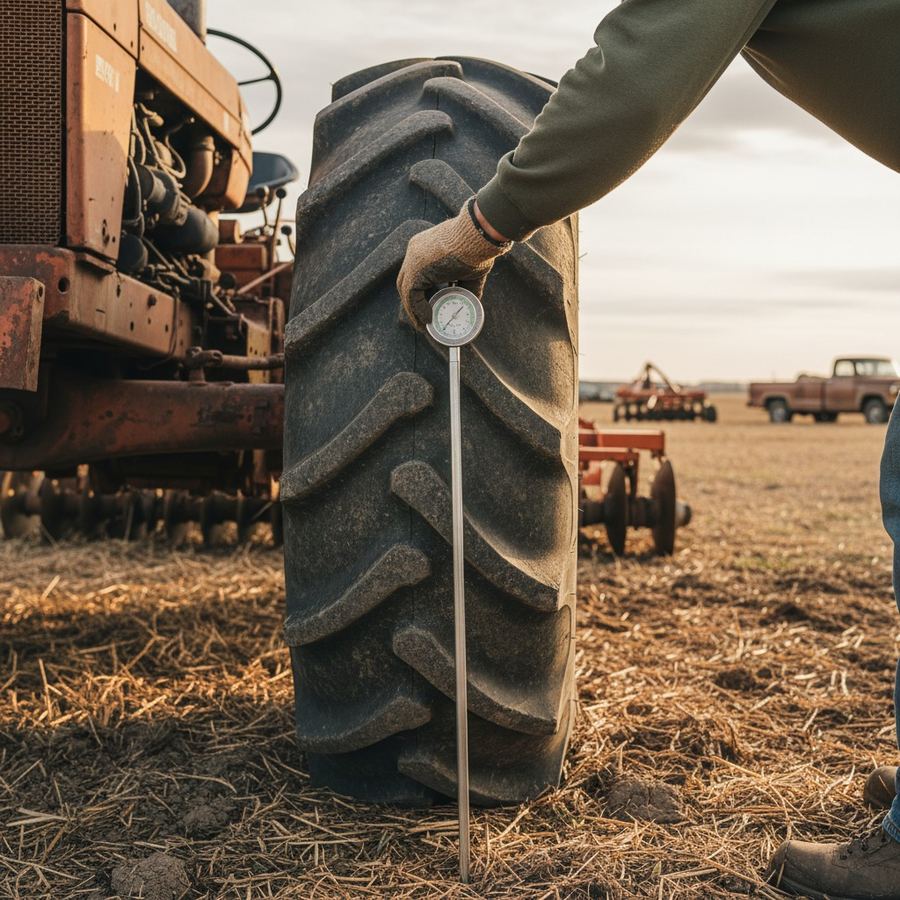
A new R-1 ag tire has lugs somewhere in the 1.6 to 2.5 inch range depending on size. A tire worn to 50 percent of new lug height is decent for most field work. Below 25 percent is due for replacement if you are going to do any serious pulling. Fronts on a 2WD tractor can run much lower and still work.
Measure lug height at three points around the tire. Heavy wear on the outer lugs usually means over-inflation or a lot of road miles. Heavy center wear means under-inflation or consistent overloading.
Sidewall Cracking and Weather Checking
Ag tires do not usually wear out their tread. They die of age. A set of rear tires on a low-hour tractor that sat outside for 15 years under a Texas sun will measure 75 percent of new and still have sidewalls that crack when you push on them. UV, ozone, and heat cycling turn rubber brittle from the outside in.
Look for cracking at the base of the lugs, cracking in the sidewall where it flexes, cracking around the bead, and any sign of rubber flaking. Weather checking that stays superficial is cosmetic. Cracks deeper than a fingernail are structural, and the tire will let go at the worst moment. Check the inside sidewall too. The DOT date code on the sidewall tells you when the tire was made: four digits, first two are the week, last two are the year.
Fluid Loading: What Is in the Tires
Ag tires are commonly loaded with fluid to add weight for traction. The type of fluid matters a great deal, and it tells you things about the tractor's history and what you are about to inherit.
Calcium chloride is the old standard. Heavy, cheap, freezes at around minus 50 Fahrenheit. It also corrodes steel aggressively, and when a tube leaks or a tire bead seeps, the calcium eats the rim from the inside out. Rusty streaks dripping down the outside of the rim, white crusty buildup at the valve stem, and bulging rim flanges all point to calcium problems. Rim replacement on large ag tires runs $400 to $900 per rim plus mounting. Budget accordingly.
Beet juice, sold under brand names like Rim Guard, is a biodegradable fluid made from sugar beet processing byproducts. It is heavier than water, does not corrode rims, and is non-toxic. It is more expensive than calcium but is the modern standard for new installations. A tractor loaded with beet juice is usually a sign the previous owner knew what he was doing.
Windshield washer fluid is an owner-done cheap solution, lighter than calcium or beet juice, freeze-protected, and non-corrosive. Plain water works in climates that do not freeze but rusts rims, and in a northern state the tractor is probably going to have a cracked rim next spring.
Ask the seller what is in the tires. If he does not know, assume calcium and inspect rims carefully. Pull the valve stem and let a little fluid out to confirm. Clear and odorless is water or washer fluid. Brown and slightly acrid is calcium. Dark and molasses-like is beet juice.
Rims: Where the Hidden Money Is
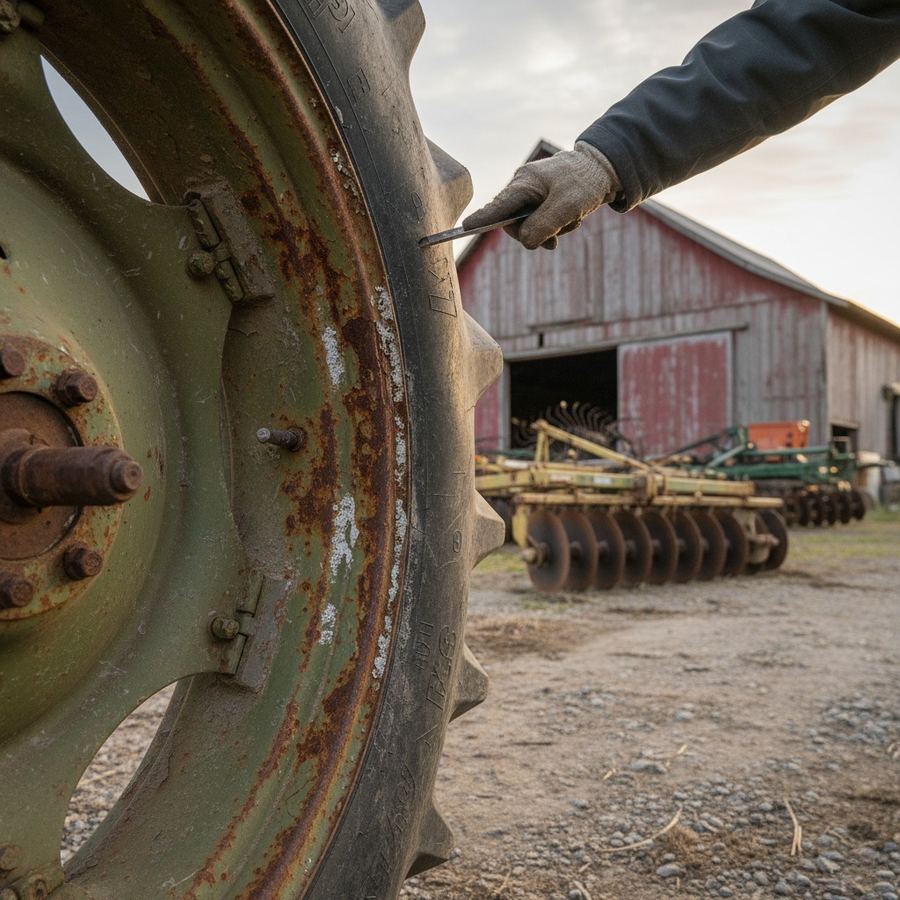
Pull the wheel weights off if they are there and look at the rim. Bead area, flange, and center disc are the critical zones. Look for rust pitting deeper than surface scale, cracks radiating from bolt holes (common on over-torqued wedge-lock rears), dents in the flange, and valve stem hole corrosion.
The insidious rim problem is calcium rot at the drop center, which you cannot see without dismounting the tire. When you go to mount a new tire, the bead will not seal and you are shopping for a rim anyway. Rear rims on large tractors, especially adjustable wedge-lock rims, are expensive and sometimes no longer available new. Used rims from salvage yards run $150 to $500 each.
Tubed vs. Tubeless
Most older ag tires are tube-type. Tube replacement is cheap ($30 to $80 per tube) and a common fix for a slow leak. Newer ag tires are often tubeless, which seals to the rim bead directly and requires a clean rim flange to work. A pitted rim will not hold a tubeless tire, which is why calcium-damaged tractors often get tubes stuffed inside tubeless tires as a field fix.
Bias vs. Radial
Bias-ply ag tires are the cheaper, more common choice on older and smaller tractors. They ride stiff, carry their rated load, and are forgiving of sidewall damage. Radial ag tires cost more, ride softer, handle heavy draft loads better, and put more rubber on the ground with less slip. For a tractor used primarily for tillage and heavy pulling, radials are worth the premium. For a small farm using the tractor for light work, bias-ply is fine.
Do not mix bias and radial on the same axle. The different carcass construction makes them behave differently and can cause handling problems and uneven wear.
Front Steering Tires: The Three-Rib Wear Pattern
Most 2WD tractor front tires are three-rib ag fronts. They wear the center rib first because the tire carries a lot of weight on a narrow contact patch. A tire worn smooth on the center rib with decent tread on the outer ribs is normal for a high-hour tractor. A tire worn unevenly across all ribs with cupping or scalloping points to a worn tie rod, a worn king pin, or incorrect toe-in. Check these before you blame the tires.
Replacement Cost Realities
Here are ballpark numbers as of current market pricing. A rear tire for a 35 to 50 HP utility tractor runs $350 to $600 mounted. A rear tire for a 75 to 100 HP utility or row-crop runs $600 to $1,100 mounted. A rear tire for a 150+ HP big tractor runs $1,200 to $2,200+ mounted. Fronts are cheaper, usually 40 to 60 percent of the rear cost. Add fluid loading at $150 to $400 per tire depending on size and fluid type.
On a used tractor purchase, price the tires at replacement cost as a negotiation lever. If the rear tires are 40 years old and cracked, the machine is effectively missing tires regardless of what the tread looks like. Factor that into your offer. For the farm trucks and trailers that haul the equipment, on-road tires are easier to price — shops like Auto Solve in Creemore can quote truck and trailer tires quickly if you need numbers for the rest of the fleet while you are sorting out the ag side.
Fitting It Into the Bigger Picture
Tires are one line item on a pre-purchase inspection, not the whole story. Work through the full pre-purchase inspection checklist before you commit. For context on what hours really tell you about overall wear, see what hours matter on a used tractor. For the other common money-pit items, the hydraulic problems guide and the PTO, clutch, and transmission warning signs piece cover the drivetrain side. And if you end up needing to source replacement tires, rims, or the fluid to fill them, where to find parts for legacy tractor models points at the right suppliers.